LATEST STORIES:

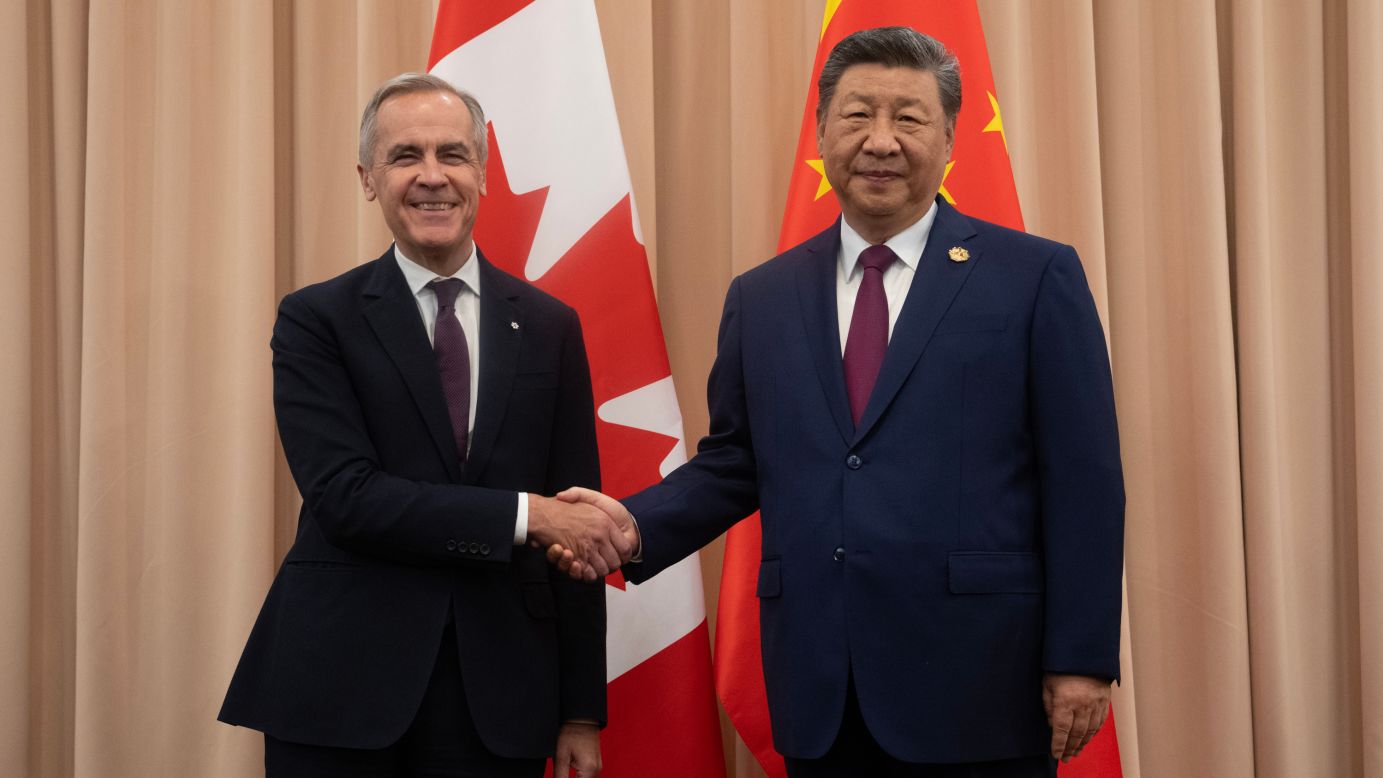
Mark Carney’s Liberal government has reached a deal with Beijing to cut tariffs on a set number of Chinese electric vehicles in exchange for dropping or reducing duties on some Canadian agricultural products.
Ontario’s government is slamming the deal, worried about the auto industry, while Saskatchewan’s premier is calling it “very good news for Canada.”
Ford says the deal will come at the expense of Canadian workers.
“By lowering tariffs on Chinese electric vehicles, this lopsided deal risks closing the door on Canadian automakers to the American market, our largest export destination, which would hurt our economy and lead to job losses,” says Ford in a statement.
“Instead of importing made-in-China vehicles, the federal government needs to be focused on working with Ontario to bring investment and jobs to factory floors in Brampton, Oshawa, Ingersoll and across the province, where assembly lines are at risk or have already left the country.”
As part of the deal, Canada will allow tens of thousands of Chinese electric vehicles into the country in exchange for lower canola duties.
Calling it a partnership that reflects the world today, and saying Canada’s relationship with China is more predictable than with the U.S., Carney laid out his deal with China’s president, Xi Jinping.
“And by building this new strategic partnership, we’re creating the stability and certainty needed to catalyze new investment and opportunities,” said Carney.
READ MORE: OPP respond to hundreds of crashes during Thursday’s snowstorm
Canada will allow up to 49,000 Chinese electric vehicles into our market each year, dropping the tariff rate from 100 per cent to 6.1 per cent – a tariff rollback that Ontario Premier Doug Ford is calling terrible.
“This was not thought out properly. It’s gonna hurt every single auto manufacturer, every single supply chain that has anything to do with the auto sector,” said Ford.
The pact comes just hours after Carney met with President Xi Jinping on a trip to Beijing, ending a multi-year trade dispute that began when the last liberal government levied EV tariffs to protect Canada’s auto sector.
Brendan Sweeney, an auto industry expert, says the issue and impact is complicated, and more details are needed from the feds.
“[Ford’s] not completely wrong. I don’t think it’s devastating for the automotive industry in Ontario, but it certainly adds to an already – you know, an existing feeling of unease,” said Sweeney.
The Global Automakers Of Canada – which represents the Canadian interests of global companies like Hyundai and Toyota – also say more details are needed.
“We have concerns, I guess, about the announcement and its impact on the existing players in the Canadian marketplace,” said David Adams, CEO of Global Automakers Of Canada.
Unifor, a union representing many Canadian autoworkers says, “This is a self-inflicted wound to an already injured Canadian auto industry. Providing a foothold to cheap Chinese EVs puts Canadian auto jobs at risk while rewarding labour violations and unfair trade practices.”
READ MORE: Carney secures energy cooperation deal in first day of Beijing talks
In exchange for these EV policy changes from Canada, China will remove tariffs on Canadian canola meal, lobsters, crabs and peas – and drop canola seed duties from 84 per cent to 15 per cent.
“That’s still not an insignificant tariff. And so I think what the market is just sort of waiting to see is how much canola will actually end up moving to China,” said Jonathon Driedger, canola industry expert from LeftField Commodity Research.
Dreidger is measured in his reaction, calling the deal a step in the right direction.
“Our take and the market’s take is a little bit of a – I don’t know, a little bit of a wait and see,” said Dreidger.
Chinese tariffs on Canadian canola oil remain at 100 per cent.
“Prime Minister Carney’s got a fine line to walk here as he strikes these international deals. And as we’re seeing now, he’s showing some love to the prairie provinces. And that means of course Ontario’s taking it a bit on the chin because those Chinese EVs are coming into the market,” said political analyst Keith Leslie.
But perhaps the most significant political reaction to this deal today is from south of the border, where U.S. President Donald Trump seems unbothered by the agreement — soothing concerns from some that this deal would hurt efforts to negotiate a trade deal with the States.
“Well, that’s okay. That’s what he should be doing. It’s a good thing for him to sign a trade deal. If you can get a deal with China you should do that,” said Trump.
WATCH MORE: Carney begins nine-day China trip to attract Canadian investments
Federal Conservative Leader Pierre Poilievre didn’t speak publicly about the deal today, but released a statement saying Carney must explain how he has gone from calling China Canada’s biggest security threat during the last election, to today’s announcement of a strategic partnership.
Ontario New Democratic Party Leader Marit Stiles has come out with her own response to the deal.
“It’s the same Doug Ford playbook; do nothing, then complain to grab headlines. Saskatchewan Premier Scott Moe flew to China with the Prime Minister to advocate for his province’s canola farmers. Meanwhile, Ford was sitting at home, leaving Ontario workers with no one to fight for them. If you’re not at the table, you’re not fit for Premier,” Stiles says.
“Let me be clear: Mark Carney is selling out our auto sector. China gets 49,000 guaranteed vehicle sales. Ontario workers get ‘expected’ investment in ‘three years.’ Our workers deserve guarantees — you don’t protect an industry with maybes.”
READ MORE: PM Carney begins visit to China to boost trade ties