LATEST STORIES:

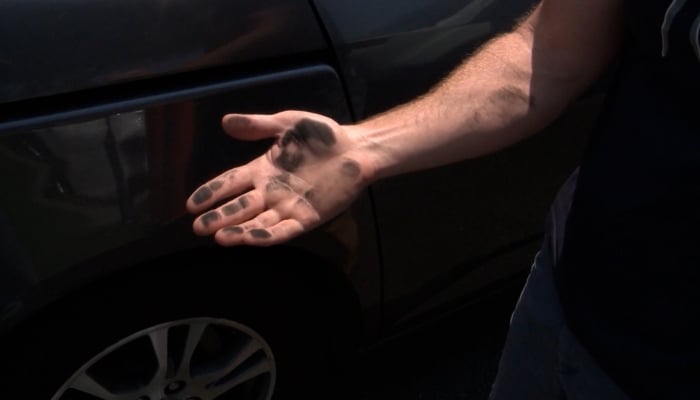
People in Hamilton are demanding more answers Friday about the black soot that falls regularly on parts of the city.
They say they’re not getting the assurances they need that their health is safe, and now the mayor is speaking out, suggesting it might be time to consider whether the industries creating the soot even belong in Hamilton.
This latest concern follows a fallout of oily, black soot in early July with people in the affected area saying the response from governments so far isn’t good enough.
Over the past month, Laura Lachance has shown CHCH News the black soot that falls on her house in north Hamilton, which she says is a daily occurrence and she’s not reassured that everything’s OK.
“Absolutely not, no, no,” said Lachance.
WATCH MORE: East Hamilton residents worry after unidentified soot covers neighbourhoods, families
Earlier this week, a McMaster chemistry professor’s report said black soot samples from 2024-2025 contained toxic chemicals, including carcinogens.
But Hamilton’s Public Health department says the soot fallout in July “does not pose long-term health risks.”
It says there was “no increase in visits to the emergency department,” indicating the soot “did not result in short-term, acute health effects.”
The report then goes on to say “air quality and its health impacts in the industrial area remain a challenge.”
“I, too, am very concerned and I think most Hamiltonians are and should be concerned,” said Hamilton Mayor Andrea Horwath.
The mayor says she’s been concerned about soot fallout for decades, like other people in Hamilton, and has been pushing the provincial government to do something about it.
WATCH MORE: Study finds toxic chemicals in soot reported across east Hamilton
“They’re the ones that regulate emissions and so they need to look very hard at whether this industry and this kind of industrial activity belongs in Ontario, considering the kind of news that we’ve heard about the impacts not only currently, but for a very long period of time,” said Horwath.
The provincial Ministry of the Environment told CHCH News this week that Birla Carbon was the primary source of the soot in July and it was going to be investigated.
Birla Carbon said it is cooperating with the environment ministry, but Hamilton City Counc. Tammy Hwang says people are left to worry about their health.
“They want to know what’s in the carbon, they want to know what’s in that black soot,” said Hwang. “They want to know how harmful or is there any harm to their bodies.”
She agrees with Environment Hamilton that people have to keep up pressure on the province to deal with the long-term issue.
READ MORE: Hamilton Public Health says July black soot event does not pose long-term health risks
“I think people are getting frustrated in Hamilton,” said Environment Hamilton executive director Ian Borsuk. “They want to see the province do more and I think, ultimately, what we can hope to see is continued pressure on the province to do this.”
Meanwhile, Lachance isn’t comforted by public health’s statement that the black soot in July isn’t expected to have any long-term health risks.
“The fact that they say ‘expected’ — like, no one knows what to expect,” said Lachance. “An outcome from this could happen in two years, five years, six years, 20 years — it doesn’t matter what’s ‘expected,’ the fact is we’ve been breathing this in and it’s wrong.”
MPP for Hamilton Centre Robin Lennox accuses Ontario’s environment minister of stonewalling Hamilton and not providing information about the black soot and why the fallouts are happening.
She’s putting together plans for a town hall meeting with neighbours and environmental experts to look at how the government should protect the city from industrial pollution.
WATCH MORE: Ontario NDP leader draws attention to Hamilton’s black soot problem