LATEST STORIES:

TORONTO — Documents detailing an inspection of a beverage production facility that regulators say was the source of a deadly listeria outbreak reveal it was cited for several infractions that have not been shared previously, including some that experts say suggest may have created a “haven for listeria.”
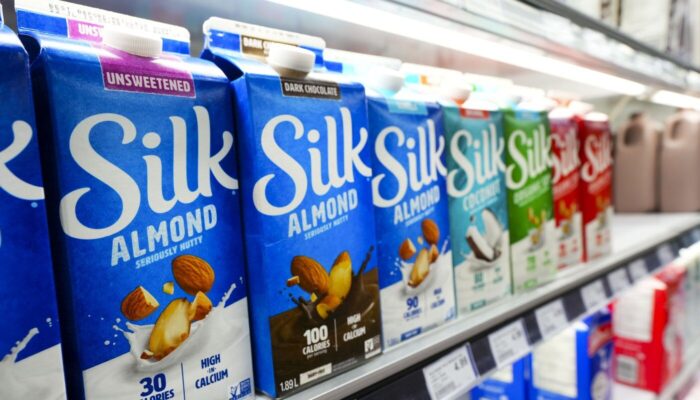
The Canadian Press obtained through a Freedom of Information request a copy of an inspection conducted by the Canadian Food Inspection Agency into a Pickering, Ont., facility that packaged several types of plant-based milk initially recalled on July 8, 2024 by the agency due to concerns of listeria contamination. The Public Health Agency of Canada said the outbreak led to 20 reported illnesses, 15 hospitalizations and three deaths.
The problems observed by inspectors between June 26, 2024 and Aug. 22, 2024 include condensation on the ceiling and peeling paint on the floor in pasteurization areas at Joriki, the third-party facility that packaged soy, almond and coconut milk under the Silk and Great Value brands. The Pickering production line was immediately shut down after the recall and never resumed.
Although portions of the inspection are redacted, food safety experts say the discernible details reveal “huge red flags” at the facility that should have alerted health officials to act sooner.
“The CFIA should have been inspecting this plant at a much higher frequency,” said Lawrence Goodridge, a food safety professor at the University of Guelph.
“This could have been prevented.”
The CFIA said, in response to criticism that they should have caught these infractions sooner, that it is a business’s responsibility to produce safe food and the federal agency’s job is to conduct risk-based inspections and oversight.
Joriki was classified by the CFIA as not high-risk in 2021, based on a model the federal agency has since said it is adapting to account for potential food safety concerns, consumer complaints and historical trends.
“The 2024 listeria outbreak underscored the importance of strong oversight in emerging product categories such as plant-based beverages, and the CFIA is taking decisive steps to modernize and strengthen its systems,” the federal agency said.
Danone Canada, which sells Silk products, said it could not provide a response because of ongoing legal proceedings. The company, as well as Wal-Mart Canada Corp., and Intact Insurance Company settled a $6.5-million class action in November with Canadians who bought or drank the recalled plant-based milk.
Joriki ceased operation at the end of 2024. Its court-appointed representative did not respond to repeated requests for comment about this inspection through email and voice mail over the span of more than a month. The Canadian Press has been reaching out to Joriki for comment on coverage related to the outbreak since 2024, but has never received a response.
Joriki has disputed CFIA allegations to The Globe and Mail, stating in a December 2024 article that it had a monitoring program for listeria, which included swabbing on the production line and conducting finished product testing. The company also said the CFIA never raised concerns about its program prior to the outbreak.
Listeria is ubiquitous in the environment, and can easily spread in food processing plants, which makes sterilizing every crevice of the facility a must.
Lori Burrows, a microbiologist at McMaster University in Hamilton, said the peeling and flaking paint on the floors noted in the inspector’s report are therefore a major problem for disinfection.
“It’s like the difference between wiping your counter and wiping your lawn,” Burrows said.
The pathogenic bacteria also thrives in wet and moist environments, such as surfaces that have condensation, which the report notes was found on the ceiling in batching and pasteurizing areas at the Joriki facility.
Not only is condensation an ideal environment for listeria to grow, but the fact that it was on the ceiling means it could have dripped onto products, she said.
The federal inspector also noted garbage and empty cartons had mounted in the loading bay area, which Goodridge said could have invited mice and rats carrying diseases inside.
“What this shows me is systemic failures in the plant with respect to food safety, a lack, a gross lack, of food safety procedures,” he said.
“The plant in which the beverage was being made may have been a haven for listeria.”
One of the first lessons Professor Claudia Narvaez-Bravo teaches her students about food safety at the University of Manitoba is to make a plan to control and prevent contamination. The industry name for this step is Hazard Analysis Critical Control Points, or HACCP for short.
Health Canada’s listeria policy is based on the HACCP principles of identifying, evaluating and controlling food safety hazards.
The CFIA’s inspection states in a partially redacted entry that the plant “does not list listeria as a hazard.”
Even without the complete context, Narvaez-Bravo said the absence of this basic principle is worrisome.
“When you’re dealing with ready-to-eat, listeria mono is always a problem. You always have to have listeria monocytogenes in mind,” she said.
“The fact that they didn’t list it and they didn’t have a good sanitation program is telling you that that was a combination for trouble.”
The inspection also says, “The finished product is not tested for listeria.”
In a later report, the federal agency said Joriki “did not properly implement environmental swabbing and finished product testing.”
“So basically, it’s a failure in this particular facility on the basics of food safety,” Narvaez-Bravo said.
In a press conference on Oct. 29, 2024, Mark Holland, the federal health minister at the time, said the CFIA had concluded its investigation and found that Joriki was not adhering to Health Canada’s listeria prevention policies, placing the blame squarely on the company.
Holland chronicled the outbreak response, which he said began on June 20, 2024, when Public Health Ontario told the federal agency there was an outbreak of listeriosis, and that they had detected listeria in a sample of Silk unsweetened coconut milk.
The next step was to confirm the link between illness and product. Lab results verified the open sample matched the outbreak strain on June 26, 2024, and the CFIA said it conducted an inspection at the Pickering facility that day.
Jennifer Ronholm, an associate professor of food science at McGill University, questioned why the plant wasn’t shut down right away in June after public health identified the plant as the source of the outbreak.
“There were clear, big problems in this plant like two or three weeks before it was linked to the outbreak. So, I mean, in theory, the outbreak could have been stopped a little sooner than it was … we could have probably avoided some illnesses,” she said.
But since the initial finding was from a sample, the CFIA said, “additional evidence was required to confirm the source and assess the risk before regulatory action could be taken.” They had to determine the scope of products affected and association to the facility.
That link was confirmed on July 8, though the primary source of the contamination was never discovered. A recall warning was issued. Affected plant lines were immediately shut down.
Almost two months later, on Aug. 22, the CFIA sent Joriki its inspection report.
When asked to what extent the CFIA communicated the food safety concerns at the plant to Joriki prior to the August report, the federal agency said they verbally told Joriki about the issues when identified, and during end-of-day meetings following six site visits between June 26 and Aug. 22.
Ronholm said there is no way to verify that verbal communication or know how it was interpreted. She questioned why inspectors wouldn’t just send Joriki a written report sooner.
“It seems like too much time between when the inspection was done and when they got the report,” Ronholm said.
The CFIA said the facility was initially given until Sept. 2, 2024 – less than two weeks after the report was sent – to fix the problems and then granted an extension until Oct. 21, 2024. Joriki responded with a corrective action plan by the October deadline, but the plant never resumed production.
At Holland’s press conference in October 2024, he acknowledged the federal agency had visited the plant in response to consumer complaints in 2018, 2019 and in 2023 to 2024 related to the possible presence of allergens, off-taste and mould.
The federal agency said the complaints were investigated and determined to be “isolated incidents that did not represent a food safety risk.” The CFIA said Joriki was told to implement corrective measures including additional sanitation controls, which inspectors verified were in place on two followup visits.
Ronholm said inspectors have to strike a balance between upholding food safety standards without shutting down every manufacturer in the country.
However, she said the mould, spoilage and listeria are all indicative of a problem after the products were pasteurized.
“I don’t want to say that we could have shut it down earlier just based on those complaints because we still need to have operating food companies, but definitely they should have been looked at a little harder in terms of their good manufacturing,” she said.
In the wake of the outbreak, the CFIA’s inspector general conducted a review of plant-based manufacturing in Canada, and found the federal agency had never visited about half of the 54 plant-based food facilities in Canada.
The CFIA released an action plan in response committing to conducting risk-based inspections of more than 2,400 manufactured food facilities currently licensed, but not yet inspected, by fall 2026. Among six action items, the agency said it will review how it integrates complaints into its risk modelling and inspection frequency.
Goodridge said he believes an earlier inspection of this facility could have made all the difference.
“These violations could have been identified earlier and the outbreak may have never happened.”
This report by The Canadian Press was first published April 17, 2026.
Canadian Press health coverage receives support through a partnership with the Canadian Medical Association. CP is solely responsible for this content.
Hannah Alberga, The Canadian Press