LATEST STORIES:

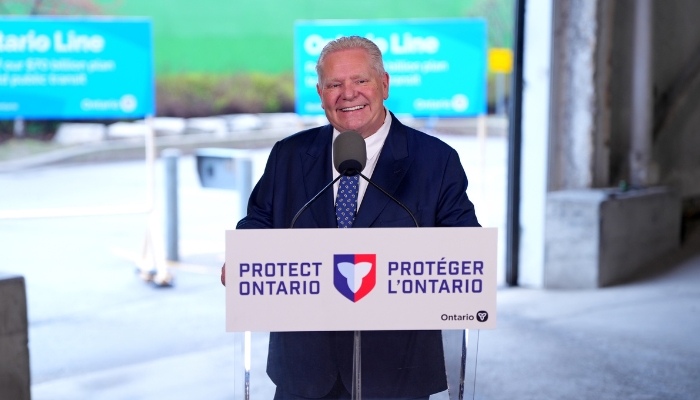
Premier Doug Ford acknowledged Thursday that grocery prices remain “sky high,” but he is rejecting calls to ban the practice of so-called surveillance pricing in Ontario.
Surveillance pricing involves companies using artificial intelligence and personal data — including browsing history, location and purchase behavior — to set customized prices. The practice identifies an individual’s “willingness to pay,” which often results in different consumers being charged different prices for the same product.
The Ontario NDP recently tabled a non-binding motion calling for a ban on the practice, which Opposition Leader Marit Stiles describes as predatory.
“This isn’t about the free market,” Stiles said. “This is about surveillance, tech companies that are actually looking at how much you spend, and then assigning one price to one person who they think can afford more, and another price to another person.”
Stiles argued that the technology could lead to individuals paying more for staples like eggs. “The government should have the backs of Ontarians,” she added.
However, Ford dismissed the idea of government intervention when asked if he would consider a ban.
“No, I believe in capitalist society, free market,” Ford said. “The market dictates if ABC grocery store wants to compete against the other one. That’s what the true driver is. Free and fair competition, and let the market dictate on the food prices.”
Sylvain Charlebois, a professor of food distribution, said he does not believe surveillance pricing is currently being used at our local grocery stores in the province, though he noted it is likely happening online in Canada.
“Online purchasing, when it comes to food, is very minimal. It’s 3.5 to 4 per cent. But it is a threat,” Charlebois said, adding that grocers could use surveillance pricing in the future.
Charlebois categorized the practice as “profiteering” when applied to essential goods.
“It’s food, it’s a necessity,” he said. “Dynamic pricing and surveillance pricing is already happening with hotels and flights, but you don’t need hotels and flights to survive. You need food to survive. And frankly, I’m not sure Ontarians or Canadians are willing to accept the fact that people will have different prices for different food products just because of who you are, where you live, your buying patterns, the colour of your skin.”
Ford argued that the primary driver of current food costs is the price of fuel. It is a sentiment Charlebois shared, noting that because the food industry is energy-intensive, grocery bills should drop if fuel prices decrease.
WATCH MORE: Ontario expanding areas where provincial park visitors can drink alcohol