
LATEST STORIES:

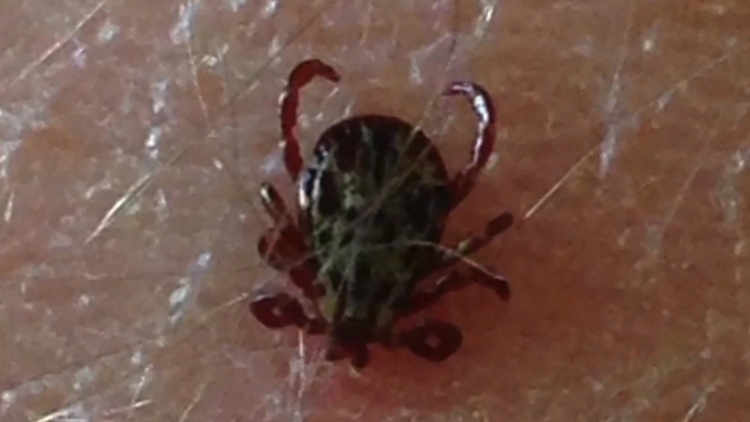
It’s that time of year again when a creepy crawly threat could ruin your outdoor adventure — ticks.
Hamilton Public Health says over 90 per cent of Hamilton has been identified as an area for black legged ticks, which can transmit Lyme disease.
“I would say over the last 15 years, we’ve had a major increase in ticks in the Hamilton area,” said Dr. Stephanie Dam with the Hamilton Burlington SPCA. “I just picked two off myself as a lunchtime walk in the area, so yeah, we have a huge problem. More so spring and fall is the worst time of year.”
Dr. Dam says she’s seen a rise in ticks that can transmit Lyme disease, and it’s dangerous for pets as well.
“Dogs seem to deal with the disease a little differently than in humans, but one of the things about screening our dogs every spring is if they’re positive for Lyme, more likely we have been in the same area, so it’s a higher risk for us to be positive for Lyme,” said Dr. Dam.
That’s because you walk in the same areas your dogs do.
What ticks do is called “questing” — they hang onto leaves or grass with their back legs, while reaching out with their front legs for an animal or person to pass, then they grab on.
WATCH MORE: Tick population boom expected in Hamilton, Halton and Niagara regions
“If you’re out hiking in a wilderness area and there is a path or a trail, try to stay central to the trail,” said Matthew Lawson, the Hamilton Public Health program health manager. “Don’t go off the trail into heavy brush areas.”
Hamilton public health says last year, out of hundreds of ticks collected during tick-dragging surveillance, 10 black-legged ticks were found. Two of them tested positive for the bacteria that can transmit Lyme disease.
“Hey, if we’ve found it once, the assumption is that it can be found anywhere and so it’s what you’d call a universal precaution,” said Lawson. “We have identified it in the past, so consider that any tick you might find might be infectious, so take the necessary steps.”
Those steps include tucking your pants into your socks and wearing light coloured clothing so you can spot ticks easier.
If you’re hiking with a buddy, check each other for ticks afterwards.
“If they do find a tick on them, they’re going to want to remove the tick properly using either a tick removal tool — there are specialized tools for that, or a pair of tweezers to pull the tick off of your skin directly,” said Lawson. “Pull the tick away from your skin so that the part of the tick doesn’t break off inside your skin — so it just cleanly removes it, kind of like removing a sliver.”
When it comes to ticks, remember the acronym W.H.A.T., which stands for Waist, Hairline, Armpits and Toes.
These are where ticks like to hang out on humans, and as for pets they tend to target the head and behind the ears.
WATCH MORE: Hamilton/Burlington SPCA aims to sterilize, vaccinate 100 community cats this weekend