LATEST STORIES:

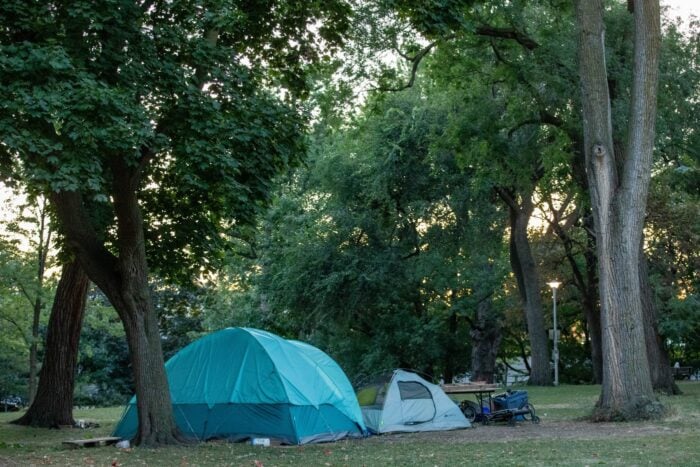
A challenge to Hamilton’s anti-encampment bylaw was revived on Friday by Ontario’s top court, after a panel of appeal judges found the lower court relied on stereotypes to discount the testimony of some homeless residents.
The Ontario Court of Appeal left the constitutionality of the bylaw and the city’s enforcement practices for a new trial judge to decide.
The challenge was brought by 14 encampment residents who argued their evictions and the city’s bylaw that blocks sleeping in parks were unconstitutional. It’s among a number of court cases in Canada to grapple with whether a city can clear an encampment when there’s no viable alternative place to shelter and city-run sites are filled up.
The Appeal Court’s unanimous ruling found the trial judge’s rejection leaned heavily on his finding that none of those evictions had taken place overnight, contrary to the testimony of several residents.
The trial judge treated the residents’ testimony as unreliable because all but one of the residents suffered from mental health and addictions issues, which he suggested impacted their memory or perception, the Appeal Court ruling said.
“The application judge’s apparent blanket assumption that the appellants’ evidence was unreliable because of those considerations perpetuates myths and stereotypes about some of the most vulnerable people in our society,” read Friday’s decision.
“It was incumbent on the application judge to analyze their evidence individually and, if he rejected it based on this individual assessment, to articulate why, without resorting to myths and stereotypes.”
The errors extended to other parts of the initial decision, the Appeal Court said. The panel found the trial judge improperly excluded evidence, including data about Hamilton’s homeless population, and failed to engage with the proper legal tests to determine whether a breach of the Charter of Rights and Freedoms had been made.
On key legal issues, the trial judge’s reasons “lacked the depth of analysis that is required” when dealing with homeless encampments, an issue of “great public importance”.
“The errors I identify in each ground of appeal can be traced back to the lack of analysis and the conclusory nature of the decision,” read the decision penned by Justice Lise Favreau.
The Appeal Court sent the case back to Superior Court to be decided by a different judge.
The City of Hamilton said it’s reviewing the implications of the Appeal Court decision, which does not affect enforcement of its bylaw.
“The city remains committed to supporting individuals experiencing homelessness with compassion and care while ensuring all residents can safely access and enjoy parks and other public spaces,” the city said in a statement, adding that it has invested more than $130 million in housing and homelessness supports this year.
Friday’s ruling follows a court decision earlier this year to block Waterloo Region from clearing an encampment after a judge found the region lacked adequate alternative shelter spaces for those residents. The ruling drew the ire of Premier Doug Ford who later called the decision “cockamamie” and mused about using the notwithstanding clause.
This report by The Canadian Press was first published Oct. 9, 2026.