LATEST STORIES:


Wildfires are raging in Europe, where record heat and droughts — which scientists say are being exacerbated by global warming — have wreaked havoc across the continent.
The fires are burning beyond crew’s ability to contain them, and water levels are so low the remains of warships long lost to history have re-emerged from the deep.
Outdoor workers are also forced to toil under the moonlight because the daytime temperatures are just too high.
“Extreme heat is becoming more frequent, more intense, it’s lasting longer and covering much wider areas than in the cooler climates of the past,” says John Kennedy, scientific coordinator for the World Meteorological Organization.
The United Nations weather agency says get used to more extreme heat — and the extreme weather it causes — due to climate change.
“We have the background warming from climate change. That’s a very kind of clear signal, particularly we can see that very clearly at a global level, but also that’s kind of manifesting almost across the whole globe — there are very few areas that haven’t warmed consistently,” says Kennedy.
WATCH MORE: Ontario wildfire crews making progress, but province not in the clear
The agency’s head of climate information says the warmer climate is combining with persistent high-pressure weather systems, which trap warm air and reduce clouds to create the record heat in Europe.
Parts of the continent are enduring their fifth heatwave of a summer season marked by drought, wildfires and record-breaking temperatures.
“For the U.K., it has been an exceptionally dry summer, quite unprecedented, particularly across England and Wales,” says Liz Bentley, U.K. Royal Meteorological Society chief executive.
The society says parts of southern England haven’t had rain in nearly two months — something never before recorded in nearly 200 years of weather data.
Almost three quarters of England is experiencing drought, hurting agriculture, the water supply and wildlife.
“We know that droughts are becoming more frequent because of climate change. We’re seeing that pattern played out. We had a drought last summer in the U.K., an exceptionally dry spring and another dry summer,” says Bentley.
READ MORE: Firefighting costs rise with over 160 wildfires burning in Ontario
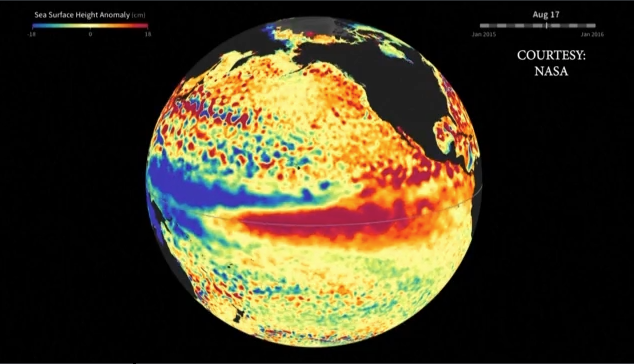
The United Nations says Europe’s latest heat wave is not a result of the naturally occurring ocean climate pattern — El Niño — which normally boosts global air temperatures. That’s because the temperature boost won’t come until later.
“Peak in global temperatures tends to come after El Niño has peaked itself, which usually happens between November and January,” says Kennedy.
But strengthening El Niño conditions in the tropical Pacific are already pushing up the temperature of the world’s oceans.
The European commission’s Copernicus Climate Change Service says sea surface temperatures hit a record high in July.
The United Nations says overall higher sea temperatures fuel higher air temperatures, which in turn fuel drought and wildfires.
“The Mediterranean has been incredibly warm, as have the waters to the west of Europe as well … and those marine heat waves also feed into the kind of heat we’re seeing over the land because they’re providing part of the background warmth that these kinds of high pressure systems are building on,” adds Kennedy.
WATCH MORE: Why summer heat can expose underlying sleep issues