LATEST STORIES:

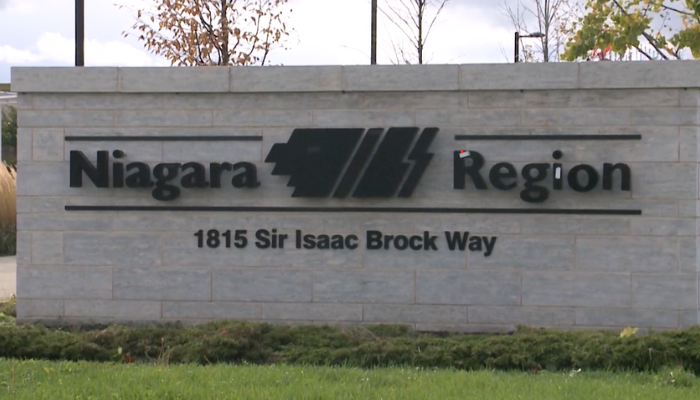
More questions than answers surround Niagara Falls as the new restructured regional government officially takes its seat, with council chambers looking very different.
The province significantly slashed the number of councillors at the table, appointed a new regional chair, and handed him more powers resulting in the biggest shake up in the region in more than a century.
The regional council will be sworn in Thursday at 6:30 p.m.
The old 32-member council is gone after the province cut down the council to just 13 seats, leaving 12 mayors plus chair Frank Campion, the former Welland mayor, who was appointed to the position by the province.
While this structure is set on paper, the day-to-day operation of it is still largely up in the air.
WATCH MORE: Ford government tables new regional governance law to empower council chairs
“There are more questions than answers right now,” said West Lincoln Mayor Cheryl Ganann.
“I think procedurally, there’s a lot of work that still needs to be done,” said St.Catharines Mayor Mat Siscoe.
“I’m not sure what the role is yet, so that’s part of the exciting part,” said Niagara Falls Mayor Lori Lococo.
For 56 years, Niagara regional council operated with more than 30 politicians around its horseshoe.
That ended Thursday night, with the council being cut from 32 members to 13 — 12 mayors and a chair.
WATCH MORE: Niagara Falls mayor uses strong mayor powers to fire CAO
Former Welland mayor Frank Campion steps into the chair’s seat, appointed there by the province rather than elected by councillors.
The province says the changes are meant to save money and cut red tape, something Siscoe says is sorely needed.
“Let’s get rid of this duplication of services, which drives residents insane, they want to see these two levels of government work, to get better, to reduce costs and deliver better services, and those are two goals I think we have to be able to say we accomplished at the end of this term,” said Siscoe.
But things are still being worked out, like a weighted voting system, in which each mayor’s vote is multiplied based on their municipality’s population.
“Trying to make sure that is fair to smaller municipalities, such as West Lincoln which is mainly agricultural, but very important to the region as well in terms of contribution to the GDP,” said Ganann. “Making sure all people in Niagara are represented when we make decisions.”
WATCH MORE: No vote for regional councillors in upcoming Niagara elections
“I’ve said as the mayor of the biggest population, I am comfortable with us changing the rules so that you need a certain number of mayors representing a certain percentage of the population, so that the smaller, more rural municipalities, have some comfort and frankly the larger, more urban, municipalities also have comfort,” said Siscoe.
The regional government covers a broad area of systems that municipalities don’t, such as water and wastewater, transit, police, and emergency services.
For newcomers to the regional table, the learning curve may be a challenge.
Lococco is stepping into two new roles at the same time.
“We had four people in Niagara falls that were serving the residents, the mayor and three regional councillors,” said Lococo. “Now without that, I’m not sure how that is going to work — do we have staff at the region? Do we have staff at the city? I’m not sure, but I’m open for the challenge.”
WATCH MORE: AMO raises concerns Bill-100 limits local authority, undemocratic