LATEST STORIES:
Niagara residents can expect a much smaller council table at its regional chambers.
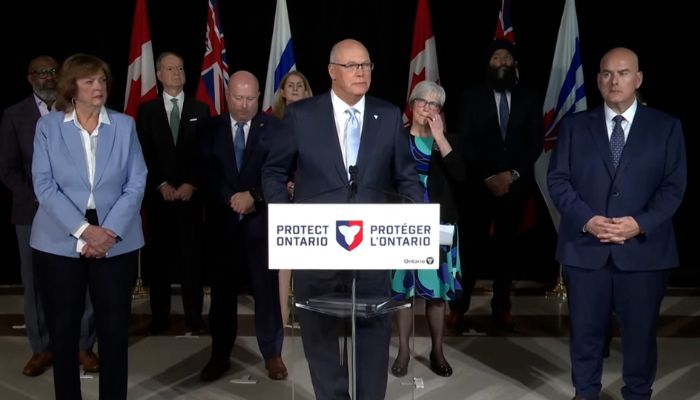
After much debate over amalgamation, Ontario Premier Doug Ford’s government is proposing new legislation on governance which includes slashing the Niagara council from 32 members down to 13.
One way or another, it appears changes are coming to the Niagara region. If the legislation passes, the Ford government will appoint all regional chairs in Ontario and they will be granted “strong chair powers” very similar to what the province gave to Ontario mayors.
They also say that the weight of a mayor’s regional vote is changing as well.
“Anything that gets rid of politicians is a good move. We have far too many politicians, far more than any other area – 126 municipal politicians,” said Jim Diodati, Niagara Falls mayor.
Diodati believes the council table inside Niagara Region’s headquarters is a bit crowded and could use a reduction – a wish granted by the Ford government today after it put forward legislation that will cut down the number of regional councillors in Ontario and allow more pull from members at the head of the table.
“All mayors are also regional councillors. We have to make decisions for the entire region. So we have to look at the big picture at all times, so that’s not going to change,” said Diodati.
WATCH MORE: Province says forced Niagara amalgamation off the table for now
All regional chairs will have strong powers, much like how Ontario mayors have in regards to pushing policies on housing and other infrastructure.
“I don’t see further amalgamation taking place, unless – and I repeat unless – that would be the choice of the local mayors going forward. But from my perspective, this isn’t a top-down piece of legislation. We listened, we’ve learned, we acted on recommendations,” said Flack.
The latest move comes following the ongoing saga and debate of amalgamation in Niagara.
A merger publicly supported by Ford and the last chair he appointed in Bob Gale, who abruptly resigned last month over allegations of owning a signed copy of Adolf Hitler’s manifesto.
“This is about Doug Ford doing anything he can to try and control local democracy and take it out of the hands of local decision makers and take power away from people,” said Jeff Burch, Niagara Centre MPP.
“He has more political staff in his office than any other premier ever, and the cost of his government is exploding. We see it. Simply, my goodness, we have a half-trillion dollar deficit already,” said Marit Stiles, NDP opposition leader.
WATCH MORE: Niagara mayors, residents divided over proposed regional amalgamation
The province argues that bloated council sizes and inconsistent methods for chair selection is slowing down the decision making process in the face of economic threats.
Should the law pass, the minister says the province will also implement weighted voting in upper-tier municipalities and establish rules to ensure fair local representation.
“The current arrangement with respect to the number of councillors is based on a population formula. So, that’s how Welland gets three votes, a mayor and two councillors in Niagara Falls get theirs and St. Catharines has the largest. But, you’ve got to balance it somehow because otherwise, if you just went straight on population, you would have three municipalities being able to govern the decisions that are being made, if they all agree,” said Wayne Redekop, Fort Erie mayor.
Flack says once the municipal elections have wrapped up in the fall, Niagara’s new regional council will have 24 months to review and make recommendations to him regarding the regional governance and administration. He also says the province aims to appoint a new regional chair sometime after the elections, but before the start of the new year.
WATCH MORE: Niagara Regional Chair Bob Gale resigns suddenly over Hitler-signed book