LATEST STORIES:

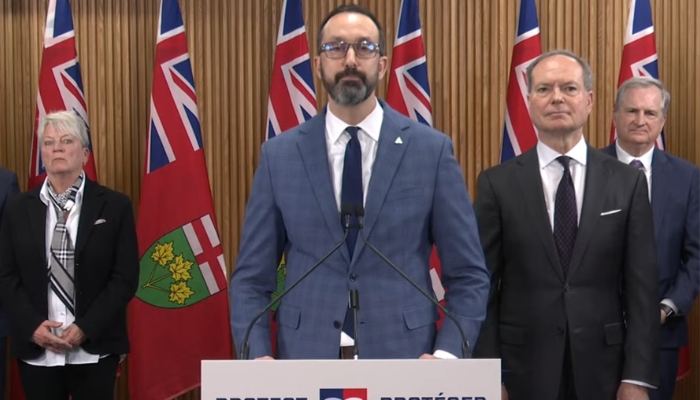
Ontario is giving colleges, universities and Indigenous institutes billions in new funding, while lifting a seven-year tuition fee freeze, and rebalancing student assistant grants and loans.
Colleges and Universities Minister Nolan Quinn announced Thursday changes that will amount to $6.4 billion in additional money over four years.
Quinn says the Ontario government is taking decisive action in response to a post-secondary financial crisis after years of low levels of government funding.
After the Progressive Conservative party won the 2018 election, post-secondary tuition was cut by 10 per cent then frozen.
Last year, institutions across the country had to cut their budgets due to a drop in revenue from international students’ tuition, which tended to be four to five times higher than fees paid by domestic students.
“In order to protect our province, it is imperative that we continue to train a strong, highly skilled workforce for Ontario for decades to come,” said Quinn in a statement.
The minister says the new funding will ensure post-secondary sustainability, and also prepare new graduates with in-demand skills while keeping costs down for students and their families.
READ MORE: Post-secondary schools brace for more pain as Ottawa cuts international student visas
The new long-term funding model will see post-secondary institutions focused on programs aligning with student and labour-market demand get more predictable, increased funding.
The additional funding includes money for 70,000 more seats for in-demand programs, while also better meeting the needs of small, rural, northern, French-language and Indigenous institutes.
The minister said colleges and universities will also be able to raise tuition fees by up to two per cent per year, for the next three years. For the years after, tuition can be raised up to two per cent or the three-year average rate of inflation, whichever is less.
The Ontario Student Assistance Program (OSAP) will also be restructured, leaning more heavily on loans. Ontario students will be eligible to receive a maximum of 25 per cent of their OSAP funding as grants, and a minimum of 75 per cent of their funding as loans.
The program will no longer offer grants to students at private career colleges, to align with changes made by the federal government to its own student support funding.
“This funding will empower our system to continue to be agile and partner with industry to drive Ontario’s economic future,” said McMaster University president Susan Tighe in a statement.
“We are pleased that the province is prioritizing small, northern and rural francophone colleges as part of this consequential announcement today,” said First Nations Technical Institute president Suzanne Brant.
On one hand, colleges and universities are delighted with the additional money they’re getting from the province. On the other hand, there’s concern that students are also going to be facing an increase in tuition.
READ MORE: Ontario education minister places seventh school board under provincial control
At McMaster University today, students and school administrators were welcoming an increase in funding from the province.
“I think it’ll be beneficial to every faculty,” said one student.
The provincial government says it’s increasing funding for colleges and universities by an additional $6.4 billion spread over four years.
“If we want a strong Ontario tomorrow, we need to strengthen post secondary institutions today,” said Finance Minister Peter Bethlenfalvy.
Tighe said she thinks the impact will be immediate.
“For example, nuclear engineering is a program that we’re looking at, further expanding all our health programs.”
The president of Brock University in St. Catharines calls the announcement bold action by the province that will help Brock prepare students for the future. The head of Niagara College is calling it fantastic news.
“Truly the government’s historic investments today represent the ultimate insurance policy by the province to ensure the resilience and agility of the workforce that Ontario needs,” said Sean Kennedy, Niagara College president.
In contrast, the province is also lifting Ontario’s freeze on university and college tuition, allowing an increase of up to two per cent. The province says is 47 cents a day for a university student.
“I know 47 cents a day doesn’t seem like a lot but it really adds up and it could be a big hindrance in determining education,” said one student.
“For me, I feel like that doesn’t have too much of an effect. I feel like I’m coming from a decent place. But for a lot of people, that could be a big decider of where they want to go and how they want to live their life,” said another student.
Students are also concerned about changes in student loans. They said they’re worried that even more of the loan will have to be paid back.
“That just means when I’m done my masters or whenever I’m done learning, I will be paying back those seven per cent interests right away and it will be a much larger amount,” said another student.
With all these changes, the province and the schools are also insisting they’ll do everything they can with programs to help keep education accessible for students facing these new costs.
READ MORE: Ontario college support staff reject latest offer and hit the picket lines