
LATEST STORIES:

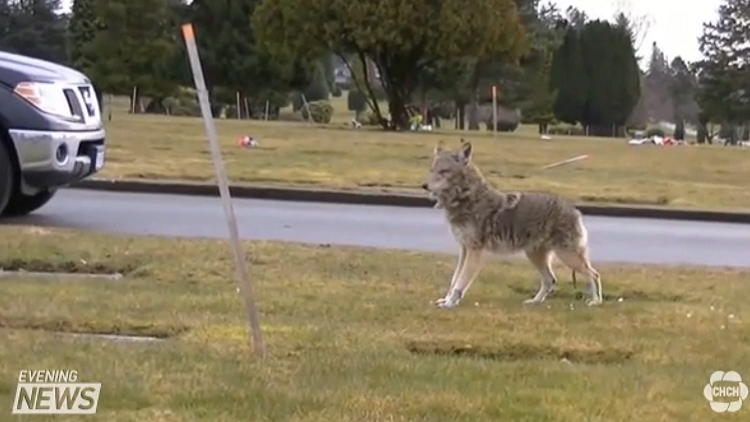
As coyote denning season begins, the city of Burlington has offered five tips to help residents avoid interactions with the wild animal.
Shortly before a coyote gives birth, between April and May, the coyote will begin excavating a den which they will use to raise their pups.
Despite being wary of humans, coyotes will seek food and shelter in residential neighbourhoods when the opportunity arises.
Coyotes are native to North America and can be found living in urban and rural areas. They often seek out food sources like mice, rats, and garbage which are readily available in residential neighbourhoods.
“With the arrival of spring, it is a good opportunity to remind residents about the things we can do as a community to help prevent potential coyote conflicts. Research and past experiences have shown the most significant thing we can do to reduce direct interaction with coyotes is to remove coyote attractants such as food – this includes direct feeding (e.g. leaving food outdoors for coyotes) and indirect feeding (e.g. garbage left at the curb overnight or rotting fruit on the ground from fruit trees),” said Grant Ziliotto, Manager of Bylaw Enforcement, Licensing and Animal Services in a news release.
Here are five things residents can do to deter coyotes:
Never feed coyotes
Feeding coyotes, directly or indirectly, teaches them to depend on human handouts and can cause them to become too familiar with humans. This habituation can lead to aggressive behaviour near people and dogs.
Never leave pets unattended
Coyotes can view pets as a threat to their territory and may attack, especially when there is a den site nearby. Always keep dogs on a short leash (less than six feet long) when walking outdoors and avoid retractable leashes. Ensure your cats and dogs are not unattended, especially at night, even in your fenced backyard.
Maintain a tidy property
Residential neighbourhoods are an ideal coyote habitat with an availability of water, shelter and food sources like garbage, pet food, fruit tress and birdfeeders. Ensure your property is tidy and clear of garbage, food, brush, long grass and wood piles which are ideal den sites for coyotes or other wild animals that attract coyotes.
Inspect your property
Ensure spaces around or under decks, sheds and similar structures are closed off with wire screening that extends at least 20 centimetres under the ground.
Consistently haze coyotes
Deterring coyotes takes vigilance. Consistent efforts by the entire community to haze coyotes can help to re-instill their fear of humans and discourage undesirable behaviour.
Use one or more of the following hazing techniques every time you see a coyote to help move it out of a residential area: