LATEST STORIES:


On Monday night, Members of Parliament in Ottawa are debating the war in Iran and its impact on Canada, but without the participation of Prime Minister Mark Carney.
The discussion comes as supporters of Iran’s new supreme leader gathered in numbers in several Iranian cities to demonstrate their loyalty to him.
“We are here to pledge allegiance to the imam of the revolution again, and our message is that we will fight with him and his ideology and god willing bring the region under our control until the last drop of our blood,” says one supporter in Persian.
Iranian state television shows large rallies in several cities, just 24-hours after the supreme leader’s successor – his son Mojtaba Khamenei – was chosen.
Iranian politicians and institutions are also pledging their allegiance.
“Mojtaba’s selection confirms that security-minded conservatives, if not hardliners, are in command and control and currently dominating the system,” says Sanan Vakil, a Middle-East expert with Chatham House.
Vakil says Mojtaba’s selection is a clear signal from senior hardliner leaders designed to demonstrate the regime’s continuity and control.
The 56-year-old Shi’ite cleric – with a power base among the security forces – has been declared unacceptable by U.S. President Donald Trump.
READ MORE: Canada’s new trade team meets Trump’s trade czar in Washington to talk CUSMA review
Vakil says Mojtaba’s selection suggests a swift end to the war is unlikely.
“It sort of foreshadows that resistance and confrontation remain very much in the cards,” says Vakil.
In an interview with CBS News published late Monday afternoon, Donald Trump says he thinks the war in Iran is “very complete” and the U.S. is far ahead of its initial four-to-five week estimate for completing the war.
With the appointment of the new supreme leader, oil prices shot up to nearly $120 US a barrel on Monday.
The price of gas surging too.
Prices were already rising because the war has effectively closed the Strait of Hormuz – where one fifth of the world’s oil and natural gas pass through.
Analysts say the pain at the pump will be felt worst in the Middle-East and Asia but will reverberate across the globe.
“We will see a more general impact on the prices internationally,” says Thina Margrethe Saltvedt, chief analyst of the sustainable finance department at Nordea Markets.
READ MORE: Evacuation plans underway for Canadians fleeing Middle East war
Global stock markets were also weighed down – worried about whether the global economy can withstand spiking oil prices.
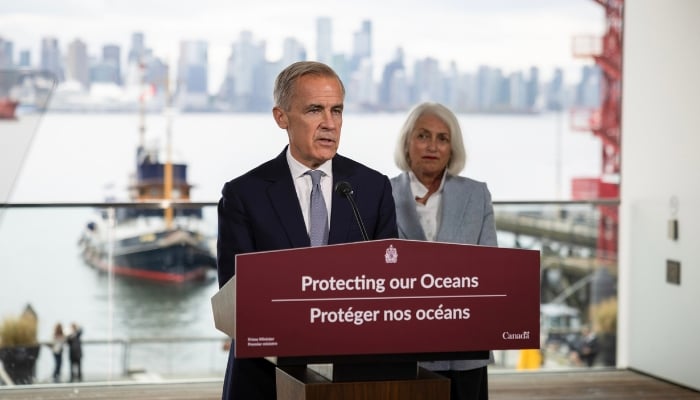
But Prime Minister Mark Carney won’t be weighing in on the issue at a Monday special parliamentary debate on the war.
Opposition parties have called for some sort of debate on the war and its impact on Canadians.
Carney initially voiced support for the U.S.-Israel attack and then days later, insisted the support came with regret and that the airstrikes likely violate international law.
The conservative leader says Canada’s stance on the war is unclear.
“The Prime Minister has taken four different positions on war in the Middle East in four days,” says Pierre Poilievre.
The federal NDP are also slamming the Carney government for its communication on the war – calling them, “unprincipled, contradictory and incoherent.”
Interim NDP Leader Don Davies joined top Tory Pierre Poilievre in criticizing Carney for not attending.
Monday’s discussion is being called a “take-note” debate which allows Members of Parliament to speak their mind on an issue, without making any policy decision.
READ MORE: Mark Carney calls byelections for Ontario, Quebec ridings in April