LATEST STORIES:

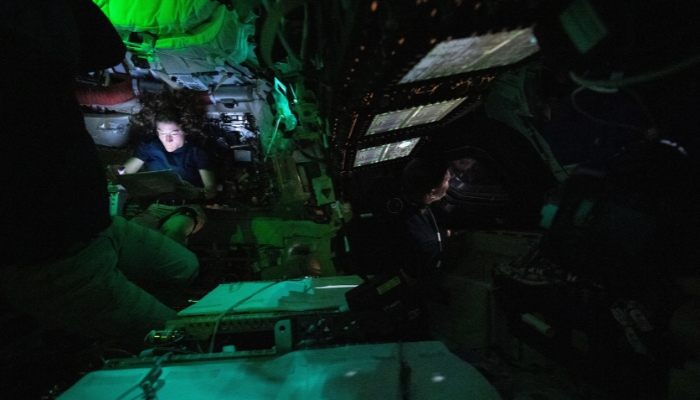
We’re nearing the three-day mark of the Artemis II mission that took four astronauts, including one Canadian, into outer space.
The astronauts took off from Florida’s Kennedy Space Centre Wednesday evening. Now on their third full day, they’re closer to the moon than they are to the Earth.
“To watch the moon grow is exciting. That’s our destination. That’s where we’re locked on to,” said Canadian astronaut Jeremy Hansen from NASA’s Orion spacecraft.
The spacecraft officially left the Earth’s orbit after the mission went ahead with what’s called the translunar injection.
“Now that they’re doing that, there’s no putting the brakes on. The only way back is to go all the way to the moon and use the moon’s gravity to loop them around and bring them back to Earth,” said John Gauvreau from Hamilton Amateur Astronomers.
In the crew’s first long-distance video call with Earth, Hansen described how that felt.
“It just felt like we were falling out of the sky back to Earth. And I said to Reid, feels like we’re going to hit it. It’s amazing that we’re actually gonna go around and miss this thing. It was just so close. And so, to take all of that in was really phenomenal,” said Hansen.
Hansen is the only Canadian aboard the Orion and the first Canadian to ever venture to the moon.
“Canada’s long history of participation in space exploration is ongoing through this mission. And our place on this mission represented through Jeremy Hansen is well earned and well-deserved, I believe,” said Gauvreau.
WATCH MORE: Artemis II continues trip towards the moon after successful launch
Here at home, Hamilton’s brightest young stars are cheering on the astronauts.
Joshua Hoeflaak has been watching the journey with his parents since the launch of the Artemis II.
“I’m pretty proud that a Canadian is up there and on the moon. Well, going around the moon,” said Hoeflaak.
Hansen also had a special message to Canadians back home.
“I would like to remind Canadians: If we can send a human around the moon in 2026, just imagine what we’re capable of doing next,” said Hansen.
For now, the rest of the planet will be keeping a close eye on Artemis II.
“Thirty years from now there will be another generation of people inspired by these events that will carry us forward to the next step,” said Gauvreau.
Next up, the far side of the moon.
The closest this crew will come to the lunar surface is when the Orion flies behind the moon, where they are expected to lose communication with the Earth for about 40 minutes.
They are scheduled to splash down in the Pacific Ocean off the coast of San Diego on Friday.
READ MORE: Artemis II astronauts begin putting Orion capsule through tests