LATEST STORIES:

In exactly two weeks, one of the greatest sporting events in the world will land in southern Ontario when Canada’s round of games in the 2026 World Cup opens on June 12.
Excitement is building as the national team prepares for the first World Cup game ever played in Canada, reaching beyond BMO Field in Toronto, temporarily renamed Toronto Stadium for the tournament, to a small farming community near Brantford, Ont.
The World Cup is billed as the most popular and prestigious sporting event on the globe, in a sport known for intense passion among fans, players and others.
“I would describe it as a passion. Like a passion for growing grass,” says Ryan Edgar from Greenhorizons Sod Farms.
“Ryan is a grass whisperer. I reckon that there’s nobody in Ontario, Canada that knows Kentucky bluegrass like Ryan,” says Mike Schiedel from Greenhorizons Sod Farms.
Kentucky bluegrass is what they grow on this Greenhorizons sod farm in Burford, a fourth-generation family operation.
It’s their bluegrass that World Cup athletes will be playing on for their six games at Toronto Stadium, with the world watching every element of the game, including the playing surface.
“Beautiful turf is what they’re going to be playing on. The best of the best,” says Edgar.
As you would expect, this isn’t just any grass.
“Greenhorizons has been working for three years on preparing the natural grass surface that that World Cup soccer event is going to be played at in Toronto,” said Steve Schiedel of Greenhorizons Farms. “And we’re very, very proud of the field that we installed last November at BMO Field.”
READ MORE: Canadian winger Tajon Buchanan ‘feeling good’ ahead of home World Cup
There is a lot to consider. For starters, it is all natural with no artificial turf.
“An absolutely perfect playing surface. Natural turf is like nothing else,” said Mike Schiedel of Greenhorizons Farms. “There’s a reason why this is being played on natural turf, not on artificial turf. Natural turf gives. You know when you pivot with your cleats you can pull up and that playability is just different from artificial.”
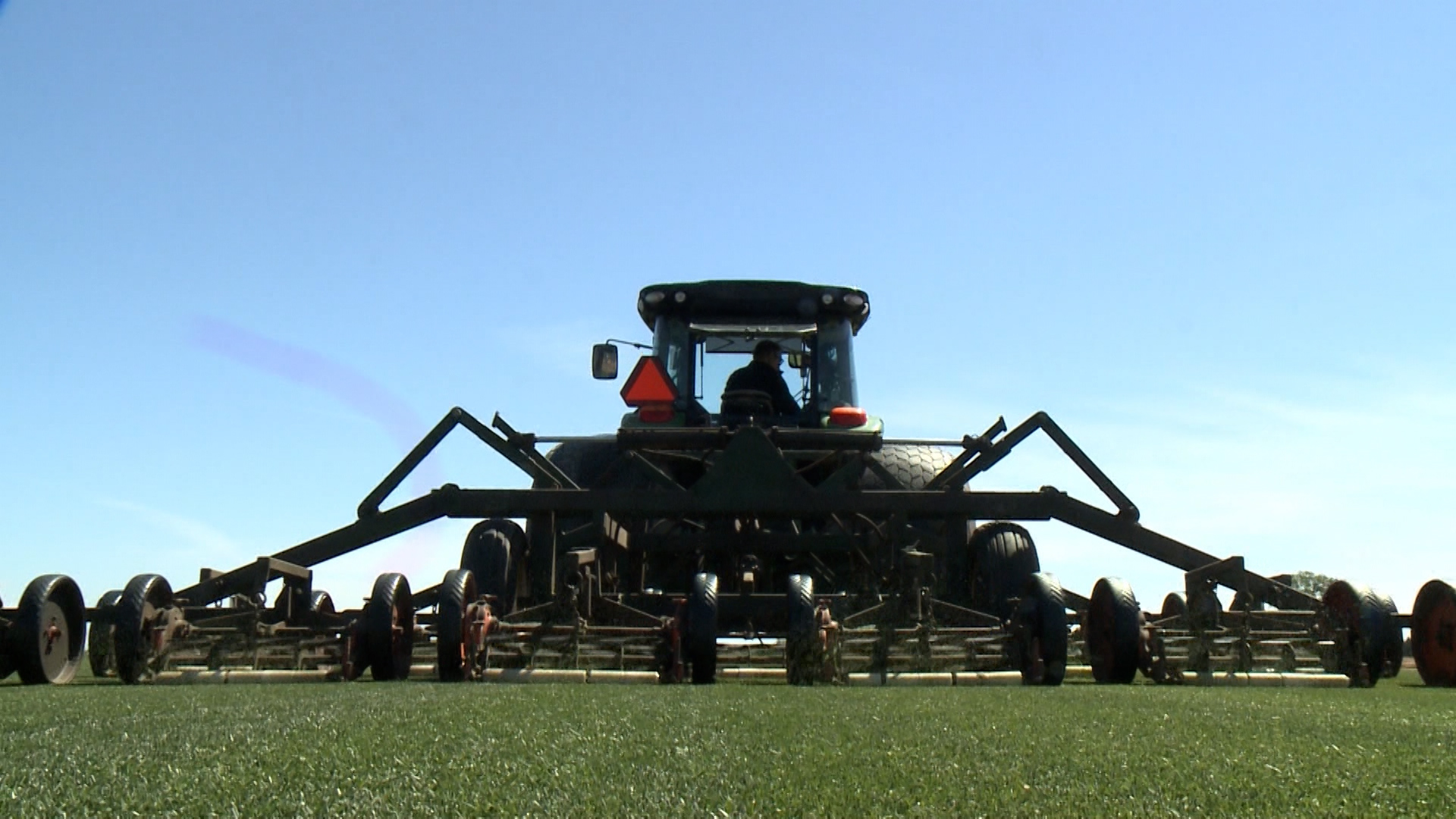
It is also a scientifically developed bluegrass. It grows sideways to create tight density, with a base of specialized sand for drainage, and it is mowed every day.
The end result is grass that looks like a solid carpet.
This year’s World Cup challenge comes as FIFA called for soccer pitches that are exactly the same in the competition’s widespread locations and climates across Canada, Mexico and the United States.
“The same ball bounce, the slip, the same traction, the same compaction level,” Steve Schiedel said. “They’re going to be mowed and maintained the same. They’re going to perform the same but they are very different grass types from southern North America to northern North America where we are.”
So when the world is watching the games, Schiedel says “we’re going to be looking at the grass.” They will be focused on the product of their family farm near Brantford.
“I think being the most passionate sod farmers in southern Ontario,” Mike Schiedel says.
READ MORE: Arrival of World Cup in Toronto, Vancouver means more chances to pick up side gigs