LATEST STORIES:

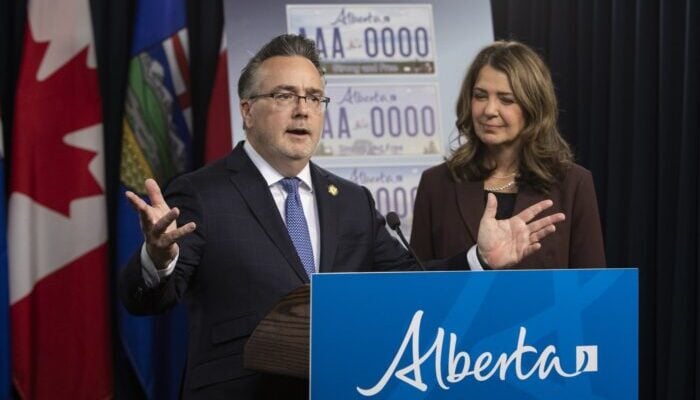
EDMONTON — Fresh off multiple Canadian provinces agreeing this week to make it easier to get out-of-province alcohol shipped right to people’s doorsteps, Alberta says it’s now time to do the same for commercial retailers.
Service Alberta Minister Dale Nally says many provinces have a “protectionist” mindset when it comes to retail liquor rules. He says that makes it difficult for breweries and distilleries in one province to get products on shelves in another.
“What we need the other jurisdictions to do is to take a page out of Alberta’s playbook,” Nally said in an interview Thursday.
“Get rid of all the red tape, get rid of the higher taxes and make it easy for our producers to get their product onto their shelves.”
Nally said producers in Alberta can spend up to two years trying to get into the British Columbia or Ontario markets, and sometimes still get turned away. By comparison, he said it takes three weeks for out-of-province companies to get their wares on Alberta shelves.
Nally said a further impetus to a new retail deal is the announcement this week by U.S President Donald Trump to soon tack 50 per cent tariffs onto a laundry list of Canadian goods, including alcohol.
“For many Alberta producers, it’s easier to get into the U.S. and into Japan than it is into other provinces, and that’s wrong,” he said.
“When one of those markets becomes shut down, then it becomes even more important that we trade amongst ourselves.”
A review of what’s on the shelves in the provinces suggests that alcohol made in-province dominates, but to different degrees.
Ontario-made products, for example, make up roughly 85 per cent of the stock in Liquor Control Board of Ontario stores. In Manitoba, the percentage sits at about 60 per cent. In Alberta it comes down to about 40 per cent.
Nally didn’t have an ideal number in mind for what the provinces should be shooting for, saying the market should decide and that go-getters get rewarded.
“If the majority of your selection is local because you’re protectionist, you’re not getting better quality,” he said. “You’re certainly not getting increased variety or lower prices.”
Blair Berdusco, the executive director of the Alberta Small Brewers Association, agreed with Nally that B.C. and Ontario were two of the hardest markets to break into, and said many Alberta companies don’t even bother trying.
Both provinces require outsiders to hire in-province agents to navigate registration. And even then, Ontario demands a minimum of product to enter its market and only accepts new products if they fill a perceived void in the sales catalogue. And Berdusco said some decisions can subjectively boil down to whether a provincial tasting panel likes what it is sipping.
Berdusco acknowledged many Alberta breweries “don’t have ambitions” to sell out outside the province or don’t produce enough to make it worthwhile.
At the same, if there was more of an open market — especially in B.C. — she said some Alberta producers would make the effort.
A spokesperson for Ontario Finance Minister Peter Bethlenfalvy, who oversees the LCBO, said a recent rule change saw the regulator broaden its call for new products to create “additional opportunities for producers from across Canada,” and that the government wants to tackle trade barriers as well.
B.C.’s Agriculture and Food Ministry, in an emailed response, didn’t dispute Nally’s criticism, but said “there are no plans to develop an interprovincial direct-to-retailer sales system.”
The ministry said once a company has hired an agent and registered their product, it can seek in-store listings — a process that could take about five or six weeks for a product to show up on shelves.
Other provincial governments, including Manitoba and Newfoundland and Labrador, did not immediately respond to requests for comment.
Alcohol was top of mind this week during the annual summer meeting of Canada’s premiers in Charlottetown.
Nine provinces signed a deal to open their borders for direct-to-consumer alcohol sales. Two of the holdouts, Quebec and the Yukon, said they need to work out some details before they join, too.
The program allows Canadians in one province to buy alcohol directly from a manufacturer in another and have it shipped to their doors. Before the deal, direct-to-consumer sales were not allowed or were subject to individual agreements between provinces for specific products, such as wine.
The Nunavut and the Northwest Territories governments declined to sign on, citing unique conditions and respect for community-level decision making.
This report by The Canadian Press was first published July 24, 2026.
Jack Farrell, The Canadian Press