
LATEST STORIES:

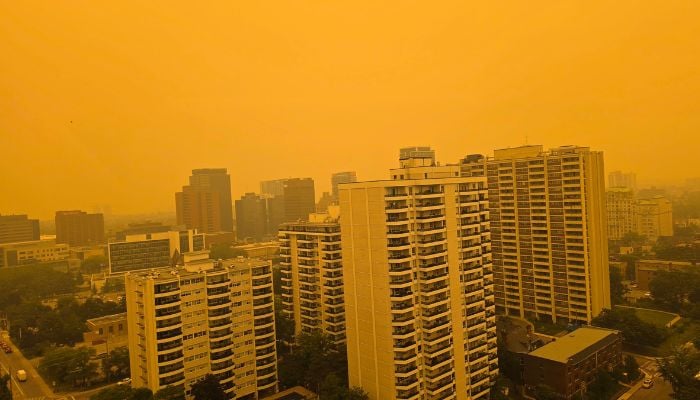
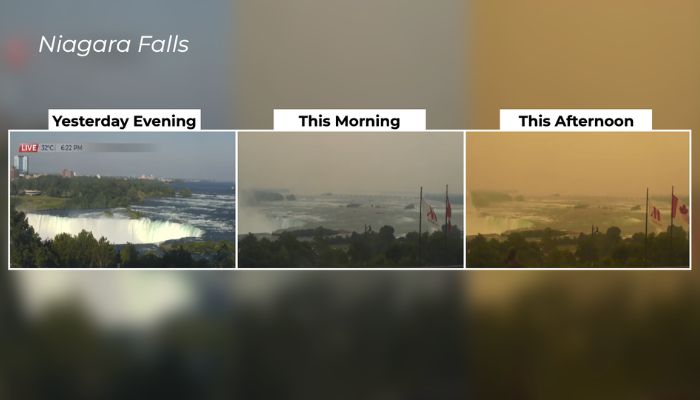
Smoke from forest fires in northwestern Ontario has drifted southeast and infiltrated the skies over southern Ontario, including Hamilton and Niagara region.
Air quality warnings are in place from Thunder Bay east to Kingston and southeast to Niagara Falls, as several First Nations communities north of the western part of Lake Superior are under mandatory fire evacuation orders.
On Wednesday morning, Toronto topped the list as the city with the worst air quality in the world.
Hamilton now sits at “very high risk” according to Environment Canada’s Air Quality Health Index.
Smog and air health advisories are issued by Environment and Climate Change Canada when the air quality health index is 7-10 or greater and expected to last for more than 3 hours.
“What’s happened is this heat dome that we’ve been talking about for several days is perfectly positioned to take the smoke at upper levels and bring it right down to the ground where we are, and people are breathing it,” said David Phillips, a climatologist with Environment Canada.
Phillips says unhealthy conditions can worsen in areas like Hamilton, where there are different elevations and lake effects.
“The lake breeze circulation, it changes both night and day,” said Phillips. “The topography will cause air to sink and then collect, and so just like you get frost hollows where deep down in the backyard, you could have a little frost hollow where you get frost there, but you don’t get in the front yard. These micro-differences do make a difference.”
Wednesday into Thursday are projected to be over 10 for the Hamilton area. Air quality alerts by city across Canada are listed here.
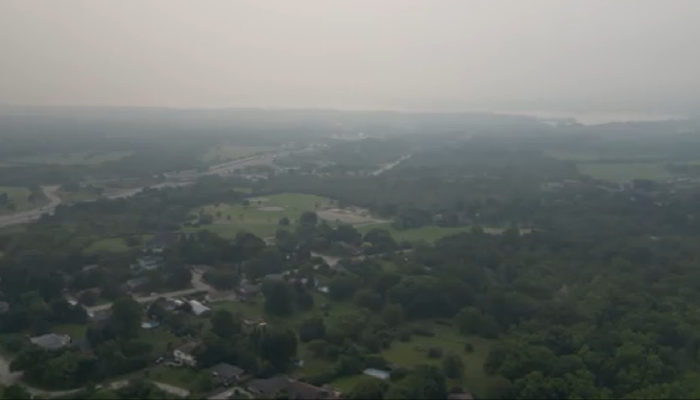
The smoke is projected to linger until Friday, when winds are expected to change direction and blow further north.
Experts say with smoke, comes tiny toxic particles in the atmosphere.
“It’s a whole bunch of things that’s kind of chemicals, that’s dust, coal particles, bacteria, so it’s a lot of stuff that is mixed, and it’s just easy to measure,” said Dr. Martin Kolb from the Firestone Institute for Respiratory Health at McMaster University. “The impact of these ones is going just deep into the system, because you breathe it in the end to the body, they go through the circulation to other organs.”
Environment Canada is advising people to limit their time outdoors and warning of the health risks of inhaling smoke, this includes when out walking their pets.
Kolb says even the healthiest person should not be outside, and all health officials have given directives including staying indoors.
Common symptoms of smoke inhalation include throat irritation, headache and cough.
Children and the elderly should take special care, particularly people with heart and lung conditions. Keep windows and doors closed when indoor air quality is better than outdoors.
The poor air quality comes as much of Ontario dealt with the second day of a heat wave that pushed humidex values as high as 45 degrees in some areas on Tuesday.
Locally, the City of Hamilton initiated an extended heat warning Wednesday morning. Cool Down locations can be identified by a “Cool Down Here” sign at various building entrances.
For more information visit www.hamilton.ca/heat.
CHCH News readers and viewers can email weather photos to: yourweather@chch.com.
With files from The Canadian Press