
LATEST STORIES:

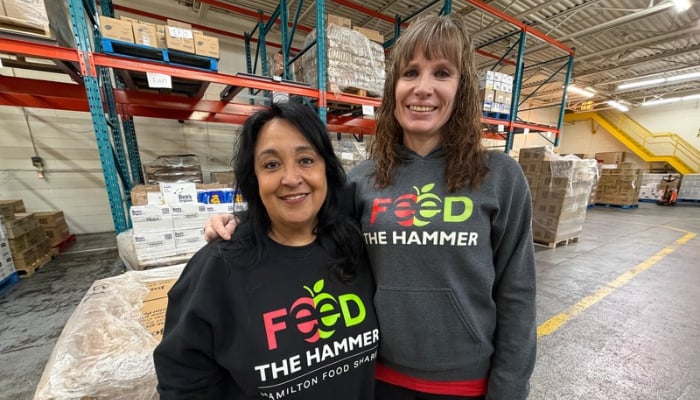
A new report from Food Banks Canada says monthly visits have risen to 2.35 million this year, with Hamilton Food Share seeing over 20,000 people coming a month.
Hunger Count 2026 is the new report that highlights how food security or insecurity has changed over the years.
“We’re seeing over 20,000 people coming a month. Our facility has distributed 5.9 million pounds of food last year which is a record amount for us in 36 years,” says Radhika Subramanyan, CEO of Hamilton Food Share.
Subramanyan says Hamilton Food Share gets food from donors, retail and people donating financially.
“The report shows that this is no longer an emergency crisis, this is a sustainable crisis. We used to talk about spikes in hunger and now we’re normalizing hunger and it’s horrifying,” Subramanyan says.
She says this food bank also provides other items including sanitary napkins, diapers for both babies and adults as well as non-perishable items.
READ MORE: Food Banks Canada says employment insurance doesn’t serve modern workforce
The report says that one in five food bank clients are employed compared to over one in 10 in 2019.
“That means you can have a job, you can have employment and still can’t afford to put food on the table,” Subramanyan says.
It states that over 32 per cent of food bank clients are children, with 776,000 monthly visits in 2026.
The report says 72 per cent of food bank clients live in market rent housing.
It adds that food prices have increased by 30 per cent since 2021 along with housing and transportation.
Food Banks Canada is calling on all levels of government to introduce what they call “economic security reforms.”
“All of our food banks are about dignity. There is so much dignity in this. We want people to understand that anybody can use a food bank, any of us could be in that place. And you will be greeted there, be welcomed there and no questions asked,” Subramanyan says.
WATCH MORE: Halton food banks wrap up holiday operations after helping dozens of families in need