LATEST STORIES:

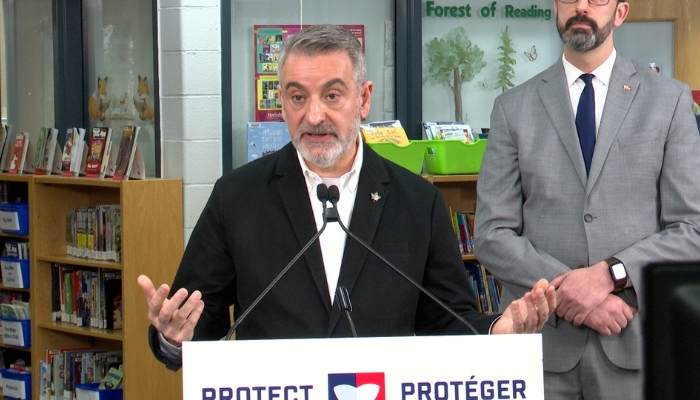
The Minister of Education Paul Calandra introduced the Putting Student Achievement First Act, 2026 at Queen’s Park Monday.
Premier Doug Ford’s government promising fundamental changes for Ontario schools.
The bill would take away some of the powers held by school trustees. It also means high school students won’t get away with cutting classes as Calandra says they do now.
There are some significant changes for students in this legislation. But the main target is school trustees, with Calandra accusing some of them of disrupting the education system and distracting schools from teaching students.
The education minister says some Ontario school boards have failed at governing their schools with the province taking over the running of several boards in the past year.
Since last year, eight school boards have been placed under provincial supervision:
“We’ve seen instances of boards inflating student enrollment to artificially balance budget,” says Calandra. “We’ve seen trustees misuse expense accounts in ways that erode public trust.”
Under his legislation, the province is calling for a Chief Executive Officer and a Chief Education Officer for each board, taking money matters out of the hands of trustees.
“The addition of a CEO within every board takes the responsibility for budgeting, the responsibility for managing a board and puts it in the hands of a CEO,” says Calandra.
The CEO can only be fired by the province in order “to prevent reprisals” from school trustees who don’t like what they’re doing.
Trustee pay will be capped at a maximum honorarium of ten thousand dollars.
The new legislation proposes limiting trustee discretionary spending, and honoraria and limit the number of elected trustees to a max of 12.
Toronto will be impacted by this, as they currently have 22 trustees. Cities like Hamilton will stay about the same.
The province is also focused on final exams for students.
“Beginning next year all high school students across all grades will compete in final examinations during a dedicated exam period,” says Calandra, “These exams will account for a meaningful portion of their grade. Final marks will also incorporate attendance and classroom participation.”
Calandra says attendance will be ten or 15 per cent of the grade.
The legislation also prevents school boards from getting into political issues outside school operations.
The Ontario Public School Boards’ Association says the government is taking away their ability to respond to local issues.
“For years trustees have been able to say we’re very concerned about poverty in our board and we’d like to set up some kind of poverty intervention and if that’s not going to be part of the role we now play we’re very concerned about that because that’s how we take care of our community,” says Cathy Abraham with the School Boards’ Association.
Teachers unions are critical of the province’s plan for central contract bargaining, and the Ontario Secondary School Teachers’ Federation says the government is ignoring the issues of “violence, growing class sizes and chronic underfunding.”
The opposition at Queen’s Park says the new legislation is a power grab.
“Nothing in this legislation goes any way to supporting kids in their classrooms,” says the Leader of the Ontario NDP, Marit Stiles.
The education minister says if people don’t like the new terms of the school trustee job and decide not to run for trustee, that’s just fine.
The province will be happy to appoint someone instead and he says he won’t hesitate to make more changes to the role of trustees if he thinks has to.
WATCH MORE: Ontario to cut length of teachers’ college addressing shortage of educators