LATEST STORIES:

New data from University of Toronto researchers shows that areas such as Hamilton, Brantford and Niagara are particularly vulnerable to U.S. tariffs.
These researchers looked at how many businesses and jobs could be impacted by one segment of U.S. President Donald Trump’s 50 per cent tariffs that came in on Aug. 22.
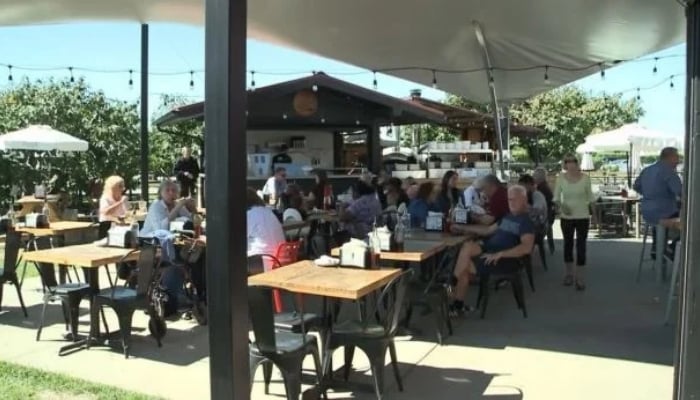
In response to Trump’s tariffs, Pillitteri Estates Winery in Niagara-on-the-Lake is putting a major focus on its cherry orchard.
“It’s an enhanced experience at a winery these days and it’s called agritourism,” says Jamie Slingerland, Director of Viticulture for Pillitteri Estates Winery.
University of Toronto researchers looked at the potential impact of the tariffs and say manufacturing areas including Hamilton and Brantford are vulnerable.
“The Hamilton region 8.9 per cent of businesses and 14 per cent of employment in that region,” says Tara Vinodrai, researcher at the University of Toronto.
In Niagara, where wineries sell to the US, could also be hit.
WATCH MORE: Doug Ford shuffles Ontario cabinet in response to U.S. tariffs
“The Niagara-St. Catharines region might be 12.2 per cent of businesses affected because of these new sets of tariffs and for employment that increases to about 15.6 per cent of jobs, which I think is a fairly high number,” Vinodrai says.
This doesn’t mean the jobs will be lost, but the threat is there, leaving businesses such as Pillitteri Estates Winery to deal with it.
They shipped their ice wine sales to the U.S. for this year’s Christmas market ahead of the latest tariffs.
“We were proactive and we bottled and packaged everything four months in advance before any tariffs came into place,” Slingerland said.
“I think we just have to wait this out and hopefully let cooler heads or saner heads prevail. Now the one thing to our advantage is that the Americans have their elections coming up in November and it doesn’t look good when you’re fighting with the friendliest guys on the block that are supposed to be your best friends.”
“I know we’ll get through it. If it takes two years, it’ll takes two years, but I believe it will happen sooner than later.”
They say one encouraging sign is that American visitors have been flooding into Canada this year while the Canadians are staying local.
“We’re Canadian and we want to support local businesses and so we’ll continue to do that. We’re not travelling across the border,” a visitor at Pillitteri Estates Winery said.
READ MORE: Ontario boosts business relief funding ahead of incoming U.S. tariffs