LATEST STORIES:


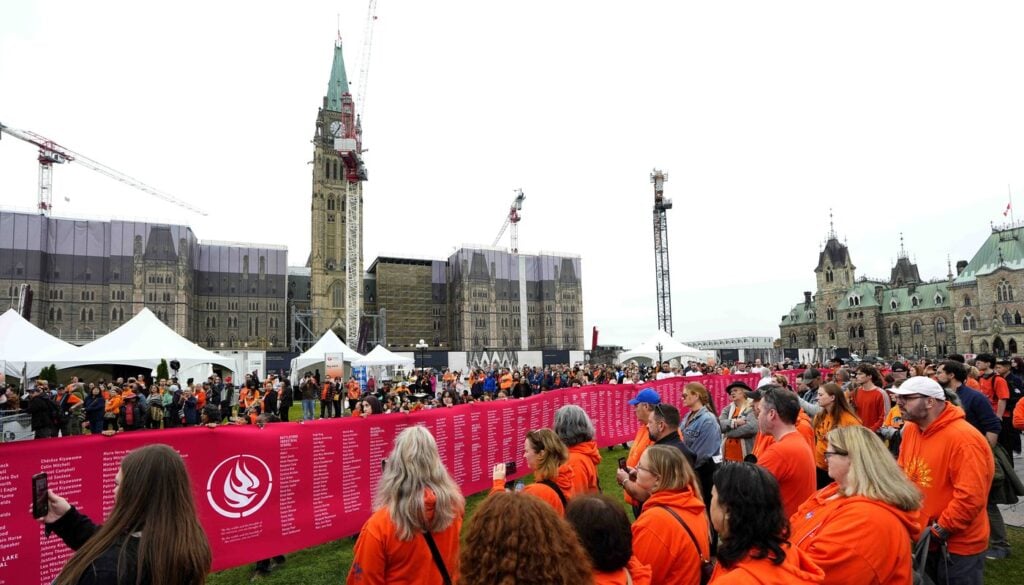
Members of Parliament are back in Ottawa for the fall session, which got underway Monday.
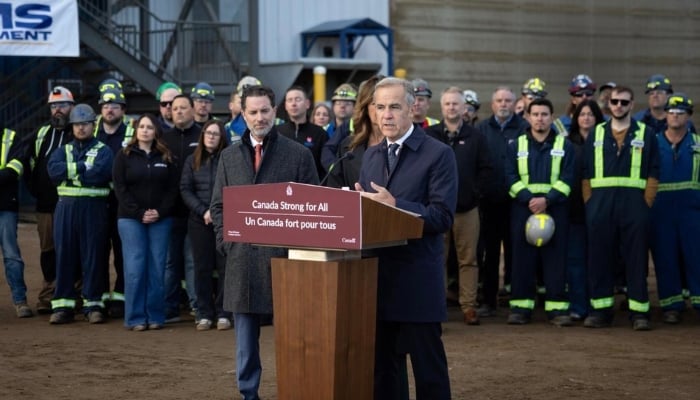
Prime Minister Mark Carney has called it a crucial session for Canada as price pressures push Canadian families to the brink, amid trade tensions and changes to the global order.
Pierre Poilivre and Carney faced each other on day one of the fall federal legislative session, with the Tory leader pushing the prime minister on affordability, and the Liberal PM defending his record.
“He’s proven once again that he is absolutely out of touch, and Canadians are absolutely out of money,” said Poilievre. “All they have gotten from him is big talk around the world and big bills here at home.”
“There are three wars affecting Canadians: the tariff war from the Americans, the war against Iran, the war against Ukraine,” said Carney. “They are pushing up fuel prices, they are pushing up grocery prices, so we are providing immediate support to Canadians.”
READ MORE: Poilievre announces local mayor as Brantford-Brant South byelection candidate
The session began during a busy moment in Canadian politics.
Carney’s governing Liberals are promising to deliver new major infrastructure projects and global investment, and a new, but yet to be defined alliance with Europe.
This as the trade war with the Trump administration lingers, and the affordability crisis pinching the pocketbooks of Canadian families and businesses.
“The keys for Carney will be to do what he said he would do, and to keep faith with Canadians,” said Charles Bird, a Liberal Strategist and Principal with Earnscliffe Strategies.
Bird says that it is on Carney to maintain the groundswell of support he is enjoying, by delivering on his promises.
WATCH MORE: Carney’s speech to European leaders receives standing ovation
Polling that was released Monday from the public opinion firm Liaison Strategies says Carney has a 65 per cent approval rating.
“They regard him as being a straight shooter, who seems to be uniquely positioned to lead Canada through what is obviously a very difficult time,” said Bird. “That gives him a ton of personal credibility and political currency, and so the trick for him will be not to blow that.”
The same polling data shows 51 per cent of Canadians have an unfavourable view of Poilievre, and it comes amid questions about his future as Conservative Leader, and rumblings of a fracture in his caucus.
“Pierre has got to find — the Conservatives have got to find that right mix of being patriotic and true to Canada, while at the same time opposing a prime minister or criticizing a prime minister who’s riding very high in the polls,” said Conservative strategist and senior vice-president of Enterprise Canada Will Stewart.
WATCH MORE: Canada invited to become first associate member of European Union
Stewart says it will be difficult for Poilievre’s party, but thinks their messaging on affordability can resonate.
“Pointing out to the fact that the Carney government hasn’t been front foot on some of the affordability issues,” said Stewart. “We haven’t seen development of resources, we haven’t seen those prices come down at the fuel pumps.”
The Carney government began its fall session Monday afternoon, by introducing sweeping legislative changes.
The new Building Canada Strong Act includes changes to streamline project approvals across the country as well as adjustments to the Canada Labour Code, in an effort to keep pace with a rapidly changing economy, while protecting workers’ rights to strike.
The proposed legislation aims to create a project approval system, where each project gets one review and a decision within a year.
READ MORE: Trump’s trade war with Canada is becoming a ballot box issue ahead of U.S. midterms