LATEST STORIES:

(Update)
The ink is still drying on Canada’s latest free trade deal. And while most politicians are applauding, several industries are appalled. So, as Canadians and companies adjust to the idea of a free trade agreement with the European Union, which promises many benefits including thousands of jobs, reaction is mixed.
Elise Copps breaks down the agreement and what it means for Canada.
Many details of the deal are still unreleased. Until the small print is written, we won’t get a complete look at the finer points. But we did get a 44 page breakdown of what it means for both Canada and the EU. First off, it means 98% of tariffs between our regions will be discarded.
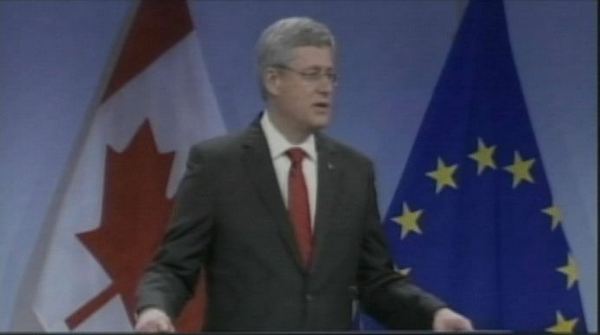
Prime Minister Stephen Harper signed off on the deal in Belgium Friday morning with President of the EU Commission, Jose Manual Barroso. CETA, as it’s called, is four years in the making and gives Canada much greater access to the largest single economy in the world.
It’s estimated the deal will increase trade between Canada and Europe by about 20%, creating roughly 80 thousand new jobs here at home.
But Canada did make some concessions in order to reach the deal. One of the biggest is cheese trade. Harper agreed to double our European cheese import quota. Also, European wine and spirits can now also be imported freely, meaning local producers could take a hit.
On the flip side, Canada can now export significantly more tariff free beef and pork to the EU, about 5 times as much, so the deal comes with checks and balances.
Harper has promised the government will help dairy farmers during the transition: “We do think there is a possibility some of some small and transitory negative effects in years to come. Canada has already indicated that we’ll provide compensation to address any adverse effects.”
The deal also includes a provision to extend patents on brand name drugs, which could affect Canada’s pharmaceutical industry. Longer patents mean less expensive generic brands won’t be as readily available. That could cost provinces a lot of money and Premiers, such as Ontario’s Kathleen Wynne, are asking for compensation there as well: “We’ve said to the Canadian government that we would like to have compensation. We’d like to make sure there is compensation if any of our pharmaceutical industry is adversely affected.”
Ontario Premier Kathleen Wynne says she is prepared to sign the agreement, and thinks its advantages outweigh the costs. That sentiment is echoed by most politicians, including Ontario opposition leader Tim Hudak: “When I look at the big picture, we got access to the richest market in the world. That’s 500 million more consumers for Ontario Products. What’s that, 15 times the size of Canada?”
The deal still needs approval from all provinces and EU member countries. And as I said before, fine details are still being worked out. It’s expected to take up to two years before a final version of the deal is signed. While it’s been well received by government, many industries and lobby groups have been very critical.