LATEST STORIES:

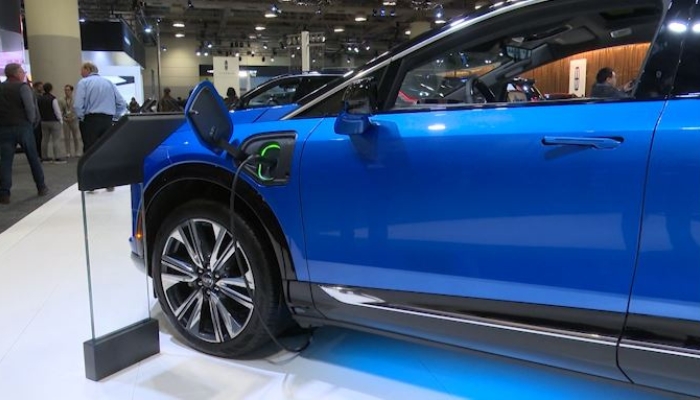
The Canadian International AutoShow opens Friday in Toronto and the big focus is electric vehicles.
There is optimism in the auto industry after Ottawa unveiled its new automotive strategy which incentivizes EV sales, but its not all sunny as U.S. tariffs continue to cast a large shadow. Canada’s largest auto show has everything you would expect — Cadillacs, Porches, race cars, army vehicles, and even cars made of Lego. Among all of this, tariffs are in industry expert’s minds.
“There is no automotive industry in Canada if we do not have access to the United States,” said Brian Kingston, president and chief executive officer of the Canadian Vehicle Manufacturers’ Association.
Representatives from all parts of vehicle manufacturing in Canada discussed the current situation in the industry. They agree U.S. President Donald Trump’s 25 per cent tariff on Canadian vehicles and auto parts is hurting the industry. They appear optimistic saying America is Canada’s biggest customer.
“We found a way to get an exemption for Canadian and Mexican made USMCA compliant parts from the section 232 tariffs. We did that by presenting data that said the industry would shut down almost immediately if you didn’t do it. That’s also true for finished vehicles,” said Flavio Volpe, president of Automotive Parts Manufacturer’s Association.
Among all this was the topic of electric vehicles, as Ottawa recently unveiled its new automotive strategy which incentivizes electric vehicle sales.
“Customers have been in show rooms excited, asking about these incentives. We think there’s more room to improve in terms of how the program is capped and which vehicles are included because if the objective is to get more EV’s on the road, there could be more done in that space,” said Huw Williams, spokesperson for the Canadian Automotive Dealers Association.
There was some criticism when asked about how they feel about Ottawa allowing 49,000 Chinese electric vehicles to enter the Canadian market.
“We need access to the U.S. for this industry to succeed, and now Canada has introduced a major irritant in our discussions with the Americans the moment we’re set to review the CUSMA agreement,” Kingston said.
“There is no benefit to the Canadian auto sector for the import of Chinese vehicles that have no Canadian content, no Canadian systems, and no Canadian raw materials,” said Volpe.
A demonstration of a Canadian-made electric vehicle was unveiled. ‘Project Arrow’ which is a collaboration between dozens of companies and partners across the country and debuted the Vector and Borealis.
“The point of that program is to show Canadian regulators and customers, OE customers, that we can do anything.”
The auto show runs from Feb. 13 until Feb. 22.
READ MORE: Chinese ambassador pitches new EVs as first step to new Canadian jobs, cheaper cars