LATEST STORIES:

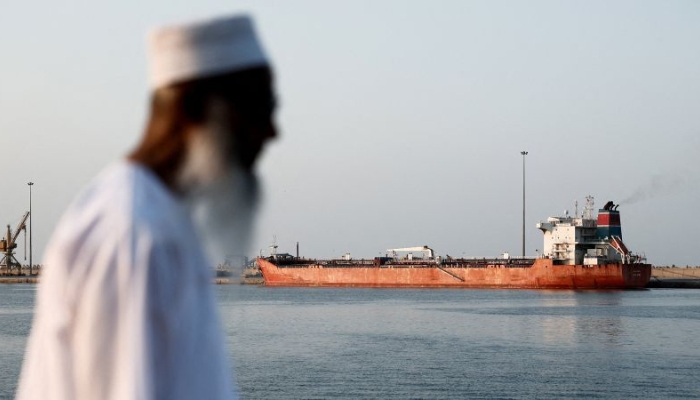
Iran has declared the Strait of Hormuz “completely open,” a move that sent oil prices tumbling after they had skyrocketed following the effective closure of the vital transportation corridor at the start of the U.S.-Israeli war against Iran.
After weeks of major disruption to global oil markets and prices topping $100 US a barrel, the change is expected to stabilize supply.
“We expect the oil to start flowing, physical oil volumes to come back to the markets,” said Rob Thummel, senior portfolio manager at Tortoise Capital. “That means that the market won’t be as undersupplied and that’s resulting in oil prices falling at the present time.”
Iran’s foreign minister announced that the corridor—which sees 20 per cent of the global oil supply transported during peacetime—has been reopened to commercial traffic.
“In line with the ceasefire in Lebanon, the passage for all commercial vessels through Strait of Hormuz is declared completely open for the remaining period of ceasefire,” the minister stated.
Thummel added that he is “hoping the days of $100 oil are behind us at this point in time.”
U.S. President Donald Trump responded by thanking Iran on social media, claiming that “Iran has agreed to never close the Strait of Hormuz again. It will no longer be used as a weapon against the World!”
However, Trump maintained that the U.S. naval blockade of Iranian ports and coastal areas will continue until a final deal to end the war is reached. He also claimed the reopening has nothing to do with the 10-day truce in Lebanon announced yesterday, despite the Iranian foreign minister stating the opposite.
WATCH MORE: Iran threatens to halt trade in Gulf Region if U.S. port blockade continues
Middle East analyst Yossi Mekelberg of Chatham House warned that the truce between Israel and the Iranian-backed militant group Hezbollah remains “extremely fragile.”
“If the ceasefire with Iran collapses, for instance, Israel would almost feel free to resume the attacks,” Mekelberg said.
He noted that the ceasefire likely paved the way for the reopening of the strait, as Iran had previously demanded a halt to hostilities in Lebanon as a prerequisite.
“Surprise, surprise, less than 24 hours later, Iran has said that as far as they’re concerned, for the length of the ceasefire, the Strait of Hormuz is open,” Mekelberg said.
Questions remain regarding what will happen in the strait if the ceasefire falters. Further uncertainty stems from Iranian state media reports calling for clarity on the details. One outlet noted that Iran’s new supreme leader—who hasn’t been seen in public since reportedly being seriously injured on the first day of the war—had previously stated the strait should remain closed.
More than a dozen countries announced Friday they are willing to join an international mission to protect shipping in the Strait of Hormuz once conditions permit.
“With a military planned conference in London next week where we will announce more detail on the composition of the mission,” said U.K. Prime Minister Keir Starmer.
Trump has previously criticized other nations for failing to contribute naval assets to secure the vital waterway following the start of the U.S.-Israeli war against Iran.
Shipping companies are also expressing caution, citing lingering concerns over safe transit. Trump stated today that the U.S. and Iran are currently in the process of removing all sea mines from the corridor.
WATCH MORE: Trump announces 10-day Lebanon ceasefire, says Iran nuclear deal is ‘close’