LATEST STORIES:

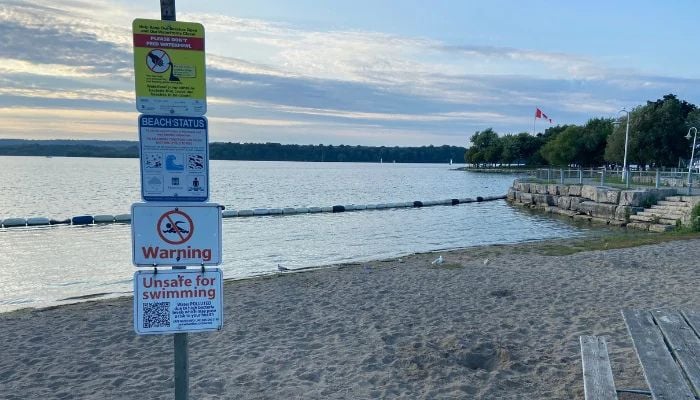
Hamilton Public Health has closed Pier 4 Park Beach after testing confirmed the presence of toxin-producing blue-green algae.
The beach will remain closed until the algae — called Cyanobacteria — subsides.
Warning signs are being posted, and health officials say they will continue monitoring water conditions.
The city is warning people and pets to avoid all contact with the water along Pier 4, and to wash off with clean water as soon as possible if contact occurs.
Anyone who has come into contact with blue-green algae and is experiencing symptoms such as fever, abdominal pain, or vomiting should seek medical attention.
“Still waters can create a condition where harmful algae can concentrate and sit. So when we have a sunny day like today, you have an opportunity for that algae to suddenly bloom very, very quickly and have a dramatic impact on that beach,” says Richard McDonald, the food and water safety manager with Hamilton Public Health Services.
Residents are urged to avoid contact with the water along the shoreline and to keep pets away from any visible blue-green algae.
Exposure can cause skin and eye irritation, rashes, nausea, vomiting or diarrhea.
Anyone exposed to the water should wash themselves as soon as possible with clean water. If symptoms arise, people are advised to contact their primary care provider.
Officials say Hamilton’s drinking water is not affected.
Blue-green algae can form in warm, shallow, slow-moving water, particularly during the summer months when temperatures fluctuate.
Algae and vegetation in the water can give off an offensive odour as it dies and decays.
The closure comes after the beach at Christie Lake Conservation Area closed on Friday due to algae blooms.
The closure at Pier 4 will remain in effect until the algae subsides, but the city says it is not sure how long that will take.
“I wish I had a crystal ball. It could take weeks,” says McDonald. “Just because a blue-green algae event does occur, even if it’s not visually present or it may have drifted off, it doesn’t necessarily mean the toxins have gone. So we’ll continue to monitor and advise the public accordingly.”
The City of Hamilton has webpages dedicated to information about harmful algal blooms and beach water quality.
READ MORE: Hamilton council approves $3.26M investment for 16 local climate action projects