
LATEST STORIES:

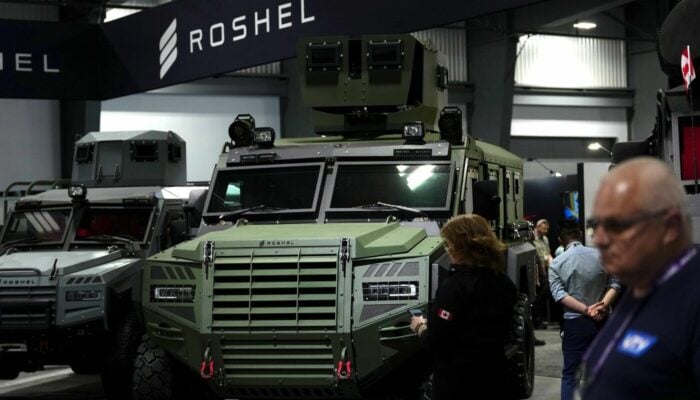
Defence contractor Roshel is slated to take over the Brampton, Ont., assembly plant that has been idle for years after buying it from automaker Stellantis.
While questions and criticism swirl about the sale and what will happen to jobs at the facility, Roshel says it wants to increase its capacity as Canada builds out its defence sector.
The Brampton-based company is a large manufacturer of smart armoured vehicles for both commercial and government organizations. Its trucks are used by military, law enforcement and security customers to protect occupants.
Roshel’s customers include government agencies like Canada’s Department of National Defence, NASA and the U.S. Department of Homeland Security, along with law enforcement agencies like the Peel Regional Police and U.S. Customs and Border Protection. Its security customers include The Brink’s Co. and GardaWorld Security.
Roshel is a privately held company founded by its CEO Roman Shimonov in 2016.
The sale of the plant has drawn the ire of the union representing Stellantis workers and government officials, but some defence industry experts say they are not surprised as to who is buying the facility considering Canada’s new-found appetite for building out its military and defence capabilities.
“As the sector expands, defence companies will need to invest in new facilities, expand existing ones, or repurpose industrial properties as they become available. This is a good example of that broader trend,” said Peter Graham, a national sector leader of aerospace and defence at KPMG Canada, in a statement Thursday.
Canada and its NATO allies agreed in June 2025 to substantially hike their defence spending target to five per cent of annual GDP by 2035. The latest federal budget says Canada will reach four per cent by 2030. As defence spending rises, domestic companies like Roshel could benefit from military procurements.
Shimonov has said it’s looking to capitalize on these new opportunities.
“With the demand that is growing all around the world, we need more space, we need more capacity. And we also need the ability to create an infrastructure to address future need for companies that are willing to invest in Canada,” Shimonov said this week in an interview.
In February, the government outlined a new $6.6-billion defence strategy aimed at helping small- and medium-sized Canadian businesses break into the defence industry and reorient spending decisions to prioritize equipment made in Canada, instead of relying on foreign military contractors such as American firms. The document claims it will create 125,000 jobs over a decade.
“(Roshel) is buying (the plant) basically because defence spending in Canada is scheduled to go through a significant increase and what they’re trying to do is get some more capacity for defence manufacturing,” Jerry McGinn, the director of the Center for the Industrial Base, said in an interview.
In recent years, Roshel has been increasing its presence in the defence industry.
In October, it completed an acquisition of French armoured vehicle producer Centigon. In June, it signed a memorandum of understanding with Daimler to jointly develop and produce armoured military vehicles for NATO and allied customers.
In April, it signed a deal with Algoma Steel Group Inc. on a joint venture called Roshel Algoma Defence, which will produce ballistic steel for military vehicles as well as other industries. The partnership includes metal fabrication, forming, welding, and machining in Canada.
And in August of 2025, it partnered with Swedish steel company Swebor in a deal that allowed it to use Swebor’s intellectual property to produce ballistic steel in Canada. Ballistic steel is a special type of relatively lightweight, hardened steel that protects against blasts or bullets.
The company has previously faced criticism for its ties to U.S. Immigration and Customs Enforcement.
U.S. government procurement records from November 2025 laid out plans for a rush order worth the equivalent of about C$10 million for 20 Senator STANG emergency response tactical vehicles made by Roshel. The purchase quickly drew criticism from arms control advocates and politicians in Canada due to the law enforcement agency’s alleged record of human rights abuses.
The company’s vehicles have also been sent overseas.
In 2023, then Defence Minister Anita Anand announced that Canada was sending an additional 200 armoured vehicles to Ukraine, which were purchased from Roshel at a cost of $90 million.
Stellantis announced the sale of its Brampton facility and associated equipment to Roshel for an undisclosed amount last Monday. The companies said they expect the transaction to close by the end of this year, however, it is subject to certain conditions, including government and regulatory requirements.
Shimonov said that the Brampton plant wouldn’t be limited strictly to defence.
“We want to continue looking for opportunities within automotive, not necessarily in defence, to create a brighter future, but it will be dependent on many other things that we are not certain of. We need certainty before committing to anything,” he said.
Shimonov added that the exact work being done at the facility will be dictated by the contracts it is able to secure.
With the facility changing ownership and possibly pivoting to defence, McGinn said other changes will likely be necessary.
“The processes might be similar but I just think the controls and the facility access, those kind of things will be a little different because they’re going be different regulations governing those for defence items versus automotive parts and the like,” he said.
This report by The Canadian Press was first published Nov. 16, 2026.
— With files from Sammy Hudes
Daniel Johnson, The Canadian Press





Hamilton police investigate Saturday’s hate-motivated incident