LATEST STORIES:

The Ford government is changing two laws related to lithium ion batteries that will prevent the modification of the batteries, and ban e-bike owners from storing and charging their bikes in apartment hallways.
There are two changes Hamilton Fire Chief Dave Cunliffe says are welcome, and fire departments across the province have been lobbying for.
Fire departments across Ontario are seeing a dramatic increase in lithium ion battery fires.
“We’re seeing more fires certainly across the province,” said Cunliffe. “We started to see more fires in the city. Right now, we’re up to about 14 fires this year that are lithium ion battery-related.”
READ MORE: Structure fire at abandoned Niagara Falls motel under investigation
Cunliffe says lithium ion battery fires burn hotter and faster than a normal fire.
“A normal fire would be 800 to a 1000 degrees — these things, when they get into thermal runaway, which is a full fire, they’re going to be burning at temperatures in excess of 1,800 degrees,” said Cunliffe.
The province aims to change a couple of laws regarding lithium ion batteries — they will outlaw the tweaking of e-bike batteries to make the bikes faster, and they will ban the storage of e-bikes and scooters in apartment hallways.
“So you can imagine, when one of these things lights up and we have a fire, and you’ve got significant heat, flashover smoke, it reduces or impedes, completely, people’s ability to get out, and it also impedes the ability of firefighters to get in,” said Cunliffe.
WATCH MORE: E-scooters: a growing trend facing questions over safety and regulation
But the fire chief says it’s not just e-bike batteries going up in flames, it’s cell phones, cars and really anything with a lithium ion battery.
“One of the things we’re seeing is there’s a lot more devices using lithium ion batteries, and depending on how they’re charged or the state of readiness that the batteries are in, it can be a big problem,” said Cunliffe.
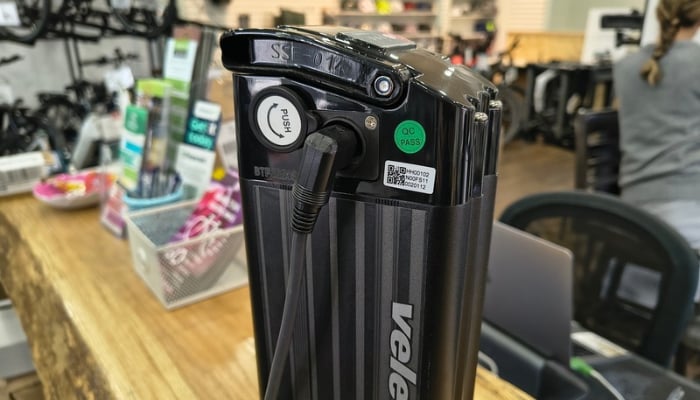
At Hamilton Electric Bikes on King Street, they’d like to see stronger regulations and enforcement on knockoff batteries and chargers that are coming into the country.
“I think they just need to better regulate things,” said Michael Kowalski with Hamilton Electric Bikes. “The big issue is a lot of products that are available, when it comes to your chargers and batteries, are just being bought off the internet and they’re not certified.”
WATCH MORE: Two hospitalized after devastating Hamilton Mountain apartment fire
Kowalski says you should never charge your lithium ion batteries overnight, or for extended periods of time.
“When you plug it in to charge it, once it’s done charging you unplug it,” said Kowalski. “We also suggest to people to put it on a timer, even if you don’t want to watch it. So if you know your battery takes four hours to charge, set it on a timer so that it cuts the power off after four hours.”
“If you’re going to charge your device, make sure if it’s fully charged, unplug it — don’t leave it overnight,” said Cunliffe. “Don’t leave it for long periods of time when it’s already charged. Make sure, at home, somebody is with it when the devices are being charged in case something happens.”
The fire chief also recommends that if you’re charging smaller lithium ion batteries or devices, to charge them on a solid non-combustable surface like a counter or cement pad, and to keep other items that could catch on fire away from them.
READ MORE: 63-year-old Fort Erie man hospitalized after e-scooter collision