LATEST STORIES:

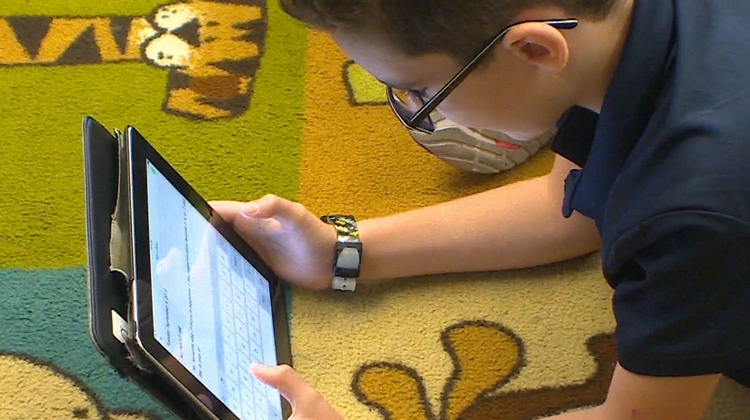
The start of the school year is just weeks away and for parents and students, that means getting back into routines and back-to-school shopping.
But for educators, it also means finding new ways to navigate artificial intelligence in the classroom.
While it’s all quiet in the schoolyard this week, preparations for the first day of class are underway, including a rapidly evolving new concern for teachers.
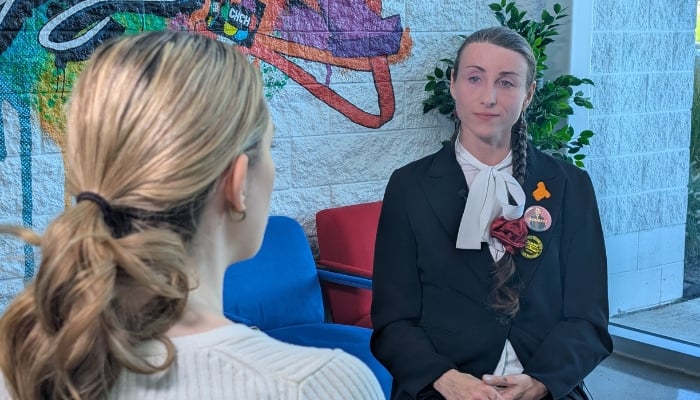
“I think it’s fair to say that just about every high school student and quite a few elementary students are using AI regularly, and so that has been a big shift in practice,” said Brian Daly, the Supt. of digital-enabled learning with the Hamilton-Wentworth Catholic District School Board (HWCDSB). “And the assessment practices need to therefore shift.”
WATCH MORE: Ontario teachers without new contract as talks between province and unions stall
In Hamilton’s Catholic school board, elementary school students are not allowed to independently use AI in the classroom, though high school students can use the online tool based on the teacher’s discretion.
“Last year, we spent a lot of our time introducing our teachers to the use of AI to enhance their teaching,” said Daly. “I do want to compare AI to social media — students got ahead of teachers on social media, and then misused it, and there were very, very damaging effects. So I think we need to learn from that lesson and make sure we get ahead of it.”
Hamilton’s Catholic board does not keep data on how many academic integrity issues it sees involving AI, but of course, it’s not just an issue in the Hammer — schools across the region and the world are grappling with the new technology.
Next door in Halton, the Catholic board sent a message to parents last month about its use in summer school.
WATCH MORE: What organizations can learn about AI from disabled, neurodivergent employees
The letter obtained by CHCH News reads, “Recently, teachers have identified an increase in instances where students have submitted work that is either AI generated or identical/substantially similar to that of their peers. In some cases, assignments have been shared and distributed through group chats and other online platforms, resulting in multiple students submitting the same work.”
It further adds that all submitted work must be a student’s own original effort.
With just around three weeks to go until students head back to class, OpenAI has released a new set of guardrails for teens using ChatGPT, but experts warn parents to still remain cautious.
“Anything that allows greater levels of parental control and transparency into how the platform works and how it engages with teenagers, is by definition a good thing, but we shouldn’t lull ourselves into a false sense of security,” said Technology analyst and journalist Carmi Levy. “These are still fundamentally dangerous tools for kids if they’re not used with appropriate oversight.”
The new model includes a “study mode” and time limits.
WATCH MORE: Are we ready for the future of AI in Canada?