LATEST STORIES:

A 43-year-old Hamilton man was just charged in a murder that happened nearly 20 years ago in Toronto.
Back in 2006, 21-year-old Patrick Santos was beaten and tortured before he suffocated to death.
At the time, investigators developed a DNA profile from the scene, but it didn’t match anyone in the national databank. The trail went cold.
Fast-forward to 2025, police identify a person of interest using modern DNA tech.
So how was it done?
Since 2020, Toronto police worked the case with a company based out of Texas called Othram.
This company is able to use even the smallest amounts of DNA or degraded DNA to help police develop leads in cases that are decades old.
“So they’ll come to us to essentially reinterpret the DNA evidence,” said David Mittelman, CEO of Othram. “And what’s special about what we can do is, basically we could identify almost anyone from DNA.”
Mittelman says traditionally, crime forensics has relied heavily on DNA matching.
“This is a very risky kind of approach because you don’t always have, you know, a lucky chance match in a database,” Mittelman said. “And you may not always have a lead to compare against.”
But Othram uses a different method.
“And so in this specific case, they asked us if we’ll be able to look at the DNA evidence and determine if it’s good enough to build a DNA profile that could be used not just to match someone, but to actually find out who they are,” Mittelman said.
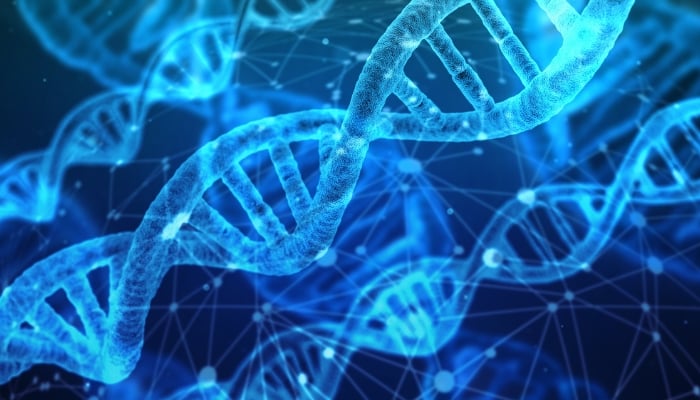
Othram begins by tracing the DNA’s historical origins — or geographical ancestry. This leads to family groups and genetic similarities which are then used to create family trees.
“The trees of everyone related to you should then eventually reveal where you fall in the tree,” Mittelman said. “And so through a process, kind of a reverse, engineering a tree, you can figure out a family tree, you can basically figure out who is a likely candidate.”
Mittelman says this process is called forensic genetic genealogy.
Once investigators have these leads, they can do follow-up work to uncover if any of these people were at the crime scene.
“So the idea here is that if you don’t have someone to compare against the crime scene, you use forensic genetic genealogy — these new tools to find a candidate.” Mittelman said. “And then you can just ask the age-old question of was this person there? And a direct comparison will tell you.”
He says that’s what happened in the case of Patrick Santos. Back in 2006, there was no match for the original profile in the national database.
The DNA profile used in traditional forensics has 20 data points. The DNA profile Othram uses has half a million. This builds them a much larger set of data to work from.
“And like I said, you’re able to figure out the historical origins of a person, you know, families that they’re related to and eventually individuals that are closely related to them,” Mittelman said. “All that information together goes back to law enforcement. They form a hypothesis and they say, ‘You know what? This might be the guy that left the DNA,’ and then they go back and do that original test that simply says, ‘Were you at the crime scene?'”
More information about Othram can be found on their website and YouTube channel.
WATCH MORE: Hamilton man charged in 2006 Toronto cold case murder