LATEST STORIES:

The Haudenosaunee Confederacy Chiefs Council is pushing back after the Six Nations Elected Council decided to join a proposed class-action lawsuit against the Haudenosaunee Development Institute.
The dispute centres on who has the authority to represent the community when it comes to development.
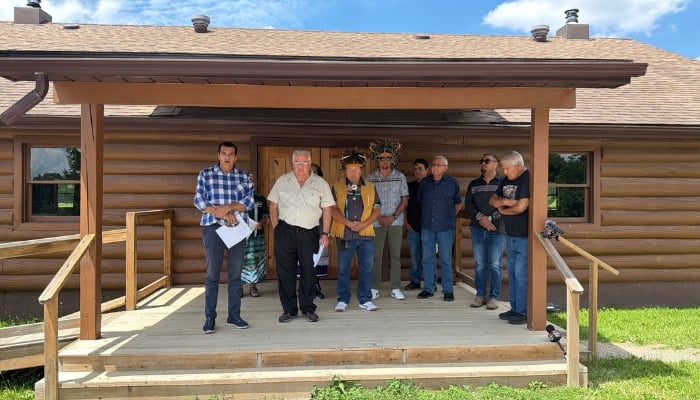
That question brought the Haudenosaunee Confederacy Chiefs Council to the Onondaga Longhouse Saturday, after the Six Nations of the Grand River Elected Council voted to join a proposed class-action lawsuit led by representatives of the Hodiskeagehda Men’s Fire against the Haudenosaunee Development Institute (HDI).
To understand today’s news conference, it helps to understand how Six Nations is governed.
The Haudenosaunee Confederacy Chiefs Council is the traditional hereditary government.
The Six Nations of the Grand River Elected Council is an elected government created under the federal Indian Act.
Both serve the same community, but they have different roles and have at times taken different approaches to land, development and governance.
WATCH MORE: Six Nations-based Seeing Red boosts Indigenous storytellers’ visibility
Earlier this month, the elected council voted to join the proposed legal action.
In a statement dated June 10, the council says: “The proposed legal action seeks accountability for consultation and accommodation funds received by HDI on behalf of the Six Nations community. Community members have a right to know how those funds were collected, managed and used.”
The allegations have not been tested in court.
In response, the confederacy accused the elected council of “crossing the line.”
“In joining this class action litigation, the Band is trying to advance the assimilation of the Haudenosaunee people by declaring that the Haudenosaunee Confederacy Chiefs Council has no say in how our Treaty Lands are used,” said Mohawk Chief Allen MacNaughton (Tekarihoken).
The confederacy says it authorized HDI to negotiate with developers on its behalf and believes the proposed class action could undermine that work.
“I do believe a lawsuit is the wrong approach — that any problems that we have with one of our committees is our business to straighten out, not anybody else’s. And if they have questions, they can ask us,” MacNaughton said.
The council has not yet responded to a request for comment on Saturday’s statement from the Haudenosaunee Confederacy.
Saturday’s news conference may have been about a proposed lawsuit, but the bigger conversation is about who represents the Six Nations community when it comes to development.
And that’s a conversation that’s likely to continue.
READ MORE: Inuit singer Susan Aglukark celebrates career, new book at Ohsweken luncheon