LATEST STORIES:

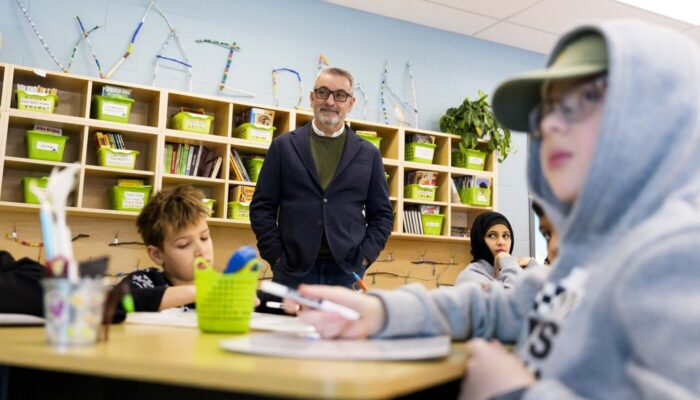
TORONTO — Education bargaining season is starting in Ontario and the unions say their priorities include smaller class sizes, improved special education funding and higher wages.
Contracts for teachers and education workers in Ontario’s public elementary, secondary, Catholic and French schools expire in August and their unions announced Wednesday that they have served notice to bargain.
“Ontario students deserve classrooms that are fully resourced, safe, and supported,” said David Mastin, president of the Elementary Teachers’ Federation of Ontario. “Bargaining is one of the most powerful tools we have to make this happen.”
Education Minister Paul Calandra said earlier this week that he expects tough negotiations, but a collaborative relationship with the unions.
“I remain quite optimistic,” he said, noting that there has been a relative lack of labour disruptions affecting classrooms under Premier Doug Ford.
Teachers agreed during the last round of bargaining to send issues that could not be settled at the table to binding arbitration, which averted possible strikes.
There was, however, a strike by education workers represented by the Canadian Union of Public Employees, closing schools for two days. It ended after the government promised to repeal a law that imposed contracts on CUPE members, banned them from striking and used the notwithstanding clause to allow the override of certain Charter rights.
That issue and others such as the imposition of a now-repealed wage restraint law have led to a relationship with the Ford government that has been at times tense, but Mastin said he hopes to take Calandra at his word that the parties will work together to get the best deal.
“Mr. Calandra made it sound very, very warm and gentle and collaborative yesterday,” Mastin said. “So, we’re looking forward to that collaboration. We’re looking forward to that desire to work together. Haven’t seen it yet, but we’ll look at that as a positive statement.”
The unions have long been signalling that class sizes would be a key issue for this round of bargaining, and Mastin said they will propose reducing class sizes in kindergarten and Grades 4 to 8. Existing class size caps in Grades 1 to 3 have provided some stability and better learning opportunities for students in those grades, so teachers want the same for other elementary classes, he said.
Martha Hradowy, president of the Ontario Secondary School Teachers’ Federation, said schools are facing staffing shortages, rising violence, growing mental health and behavioural needs, and increasingly complex classrooms.
“The challenges bringing us to the table have been building for years, and the consequences of inaction are becoming impossible to ignore,” she said.
“This round of bargaining is about improving learning conditions for students and working conditions for those who support them every day.”
Hradowy also said class sizes in high school are also too large, including with the advent of destreaming, which she said did not come with enough supports or resources from the government.
Special education will also be raised at the bargaining table, the unions said, especially as some students are asked to stay home because there are not enough supports at school for them to attend safely.
“We want to see a real investment in special education in this province,” said Joe Tigani, president of the union representing CUPE education workers.
“We know there are many, many kids that are being left behind, falling between the cracks, that are being told they can’t even come to school, so yeah, we have a number of asks around increasing staffing.”
Wages increases will also be part of the unions’ proposals, they said, though they did not give an idea of the specific percentages they would seek.
This report by The Canadian Press was first published June 3, 2026.
Allison Jones, The Canadian Press