LATEST STORIES:

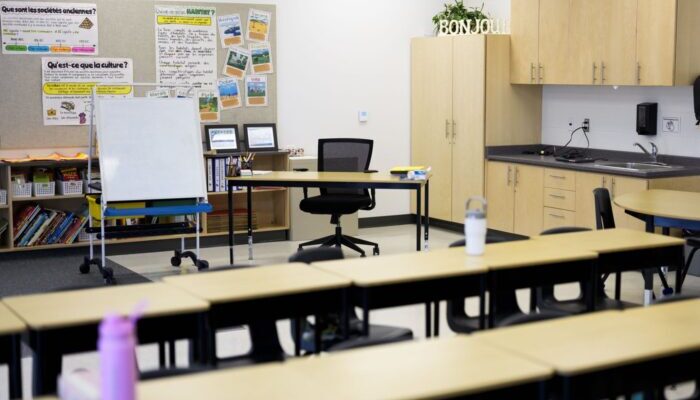
Funding of special education in Ontario is not keeping pace with the growth in need, which is rising faster than general enrolment, the province’s auditor general said Tuesday.
In a report on special education, auditor general Shelley Spence also highlighted educational assistant staff shortages and unfilled absences, an assessment system that lets families who can afford to pay wait less time, and exclusions of students when schools can’t meet their needs.
The government should revisit how it funds those supports for students with special needs, Spence said.
“There (is) an increase in special education students compared to the increase in students overall,” she said at a press conference.
“So certainly, there is more special education needs than in the past and even though the funding has kept (pace) with inflation, it has not kept pace with the growth in special education needs.”
Between 2014-15 and 2023-24 student enrolment grew by four per cent, while the number of students with special education needs grew seven per cent, the auditor found.
Government funding for special education increased by 15 per cent between 2019-20 and 2023-24, but total special education spending by school boards increased by 19 per cent. Advocates have long said that boards are spending more on special education to try to fill the gaps.
Education Minister Paul Calandra suggested that more funding isn’t necessarily the answer.
“What I want to ensure … is what are the outcomes?” he said.
“Does the additional funding that has been increased, the funding that we’ve added to the system over the last number of years, does that match with improved outcomes in special education? So I don’t necessarily have evidence that that is, in fact, the case.”
Even with additional board funding, schools are also experiencing shortages of educational assistants who provide supports to students with special needs, with half of all elementary schools in one board understaffed, Spence found.
The auditor general found there are also wide ranges of EA availability even within the same board. For example, some schools in the Peel board had nine high-needs students per educational assistant while others had one-to-one support.
Calandra said student need should guide EA staffing levels.
“On the surface, would more EAs make sense?” he said. “Perhaps, but only if you look at the actual mix. What does that student require at that particular school? And that’s why you have discrepancies from board to board and from school to school.”
School boards are seeing high and rising absence rates among educational assistants, the report said, with an average 18 per cent absence rate in the 2023-24 school year, compared to 10 per cent for special education teachers and 11 per cent for other teachers.
“We consistently heard that student needs had become increasingly complex,” Spence wrote in the report.
“Without adequate staffing, this led to difficulty managing high-needs students in large classrooms and behavioural challenges. For EAs especially, it resulted in heightened stress, more frequent physical injuries and a corresponding high rate of absenteeism.”
When educational assistants are absent, there are often no qualified temporary replacements available, Spence said. Her audit looked at three school boards in particular — Peel District School Board, Toronto Catholic District School Board and Upper Canada District School Board in eastern Ontario.
Educational assistant absences at those boards went unfilled between 49 and 72 per cent of the time, the audit found.
“Unfilled absences can result in students being left without the assistance they need to participate safely and meaningfully in classroom activities,” Spence wrote in the report.
When students cannot be safely supported at school, they can be asked to stay home or the school can call their parents to pick them up. The practice is referred to as exclusions and the auditor said they are not being properly documented.
“They’re not tracking that data, and so we can’t tell you how under-reported it is, but we do know it is under-reported,” Spence said.
Official figures show about 239 students – about 0.07 per cent of those receiving special education services –were excluded, but other surveys over the years by Community Living Ontario, People for Education and the Ontario Autism Coalition suggest it is far more widespread.
Calandra said he is troubled by the exclusions.
NDP Leader Marit Stiles said the government needs to put more money into special education.
“Time and time again, we hear horror stories about children not having the resources they need, educators and educational assistants hanging by a thread, unsafe classrooms, and students being sent home without any documentation or explanation,” she said.
Students with special education needs receive individual education plans, though Spence identified several shortcomings in the process, such as a lack of measurable goals, transparency, and written reasons.
Wait times for psychological and speech-language assessments through schools boards can be long, Spence found. At two of the boards her team dug into, one-third of the students who needed an assessment had been waiting for more than a year.
Parents can pay privately for assessments, potentially costing more than $5,000. Board specialists review the results of those assessments before incorporating them into IEPs, and because it takes less time to review an assessment than conduct a full one, the wait times for families with private assessments can be much shorter, Spence said.
Interim Liberal leader John Fraser said a six-year-old girl in his riding of Ottawa South has been waiting for supports at her school even two years after her parents paid for a private assessment.
“So in Doug Ford’s Ontario, you can even pay twice — through your taxes and privately — and not be guaranteed that your child will get what she needs in school,” he said.
This report by The Canadian Press was first published May 12, 2026.