LATEST STORIES:

Iran’s new supreme leader is vowing to continue blocking the Strait of Hormuz – a strategically vital shipping channel for the world’s oil supply.
The threat, and a series of strikes on cargo ships in the Persian Gulf, sent oil prices above $100 U.S. a barrel in morning trading.
All this as more U.S.-Israeli strikes rain down on Iran, and as Israel prepares to expand military operations against Iran-backed Hezbollah in Lebanon.
The Canadian government has announced millions of dollars in aid for the Lebanese people who the foreign affairs minister says are caught in the crossfire.
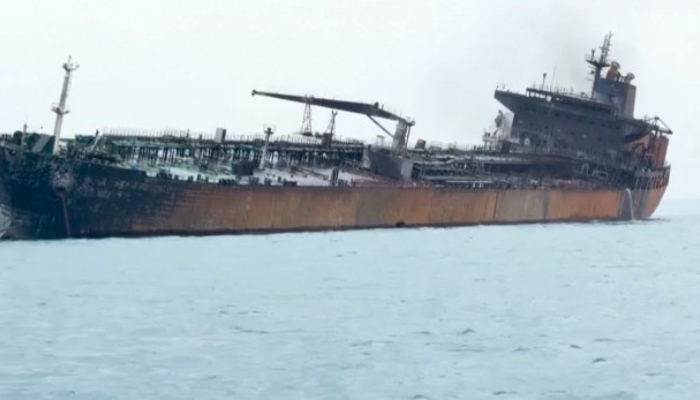
Iran’s Islamic Revolutionary Guard says it is responsible for destroying the U.S.-owned oil tanker, the Safesea Vishnu – one of two oil tankers attacked off the coast of Iraq overnight.
A third vessel, a cargo ship, was also attacked near the UAE, though Iran is only claiming responsibility for the U.S. oil tanker.
The attacks come as a statement attributed to Iran’s new supreme leader Mojtaba Khamenei was read out on state TV, vowing to keep the Strait of Hormuz blocked and to get revenge for the death of his father – the former supreme leader.
Khamenei also promised to keep up attacks on U.S. bases in neighbouring Gulf countries, as well as the U.S.’ partner in the war, Israel.
More Iranian missiles were intercepted overnight but some hit targets in Israel, while others hit a fuel depot in Bahrain, causing massive fires.
WATCH MORE: Iran escalates attacks as global oil supply tightens
More than 1,800 people have been killed across the region since the initial U.S.-Israeli attack.
But Iran’s new supreme leader has not been seen publicly since that first day of the war, and no explanation has been offered by the regime.
There are conflicting reports on Khamenei’s health, some claiming he is in a coma and has had a leg amputated.
A verified video from within Iran shows the aftermath of another U.S.-Israeli strike on the nation.
Israel says it also began another wave of strikes on Tehran – targeting the regime’s infrastructure in the capital.
The U.S. military released video of more attacks on Iranian military aircraft.
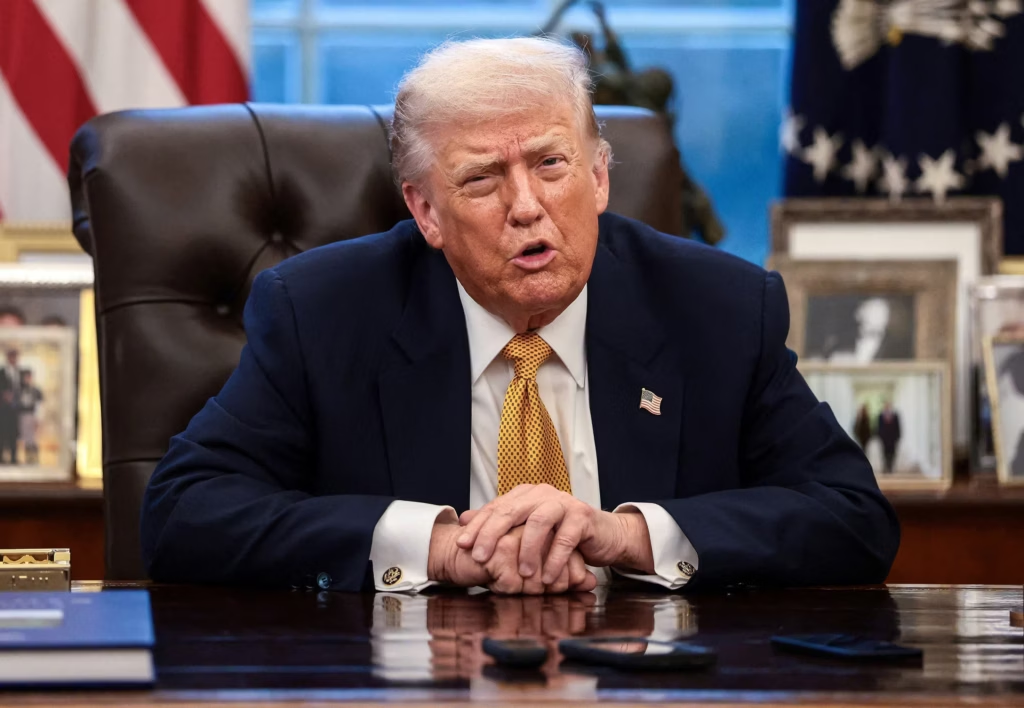
U.S. President Donald Trump has already claimed victory in the war, but says the fight will continue. “We don’t want to leave early, do we? We gotta finish the job, right?”
“All of our military assets right now are focused on destroying Iran’s ability to wage war and terrorize the neighbourhood,” said Chris Wright, U.S. energy secretary.
Wright says the American military will reopen the Strait of Hormuz and calls the disruption to the oil supply temporary.
“When we can afford some additional assets to move tankers through the Strait of Hormuz, we will do that. That’s coming,” said Wright.
WATCH MORE: Why Iran cannot participate in the World Cup
But until the strait reopens, the cost of oil and the price at the pumps will remain high, and analysts say those extra transportation costs will get passed on to consumers – with increases expected in the prices of many goods, especially food.
“So this will have an effect on a lot of other sectors of the economy, that is for sure,” said Gabriel Giguère from the Montreal Economic Institute.
The Israeli military has been ramping up strikes on Iran-backed Hezbollah in Lebanon, where Israeli bombs killed several people this morning.
Israeli tanks and troops are also massing ahead of an expected ground invasion of southern Lebanon where hundreds have already been killed in cross border fighting.
The human and economic impacts of this war will continue to grow as the war itself expands.
“The reality is that the Middle East is not a stable political place,” said Giguère.
In response to the expansion of Israel’s attacks in Lebanon, the Canadian government is promising more than $37 million in humanitarian aid for people caught in the crossfire.
“We call on all actors to immediately de-escalate the situation and engage in constructive dialogue to prevent further suffering,” said Randeep Sarai, Canadian secretary of state for international development.
The UN says more than 3 million people in Iran have been displaced since the war began.
The International Energy Agency says the world is now experiencing the largest disruption to the global oil market in history.
WATCH MORE: U.S. vows intensified strikes as Iran threatens Strait of Hormuz oil flow