
LATEST STORIES:

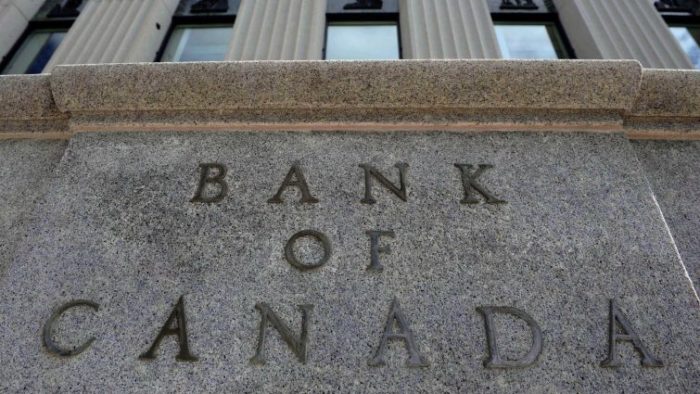
Amid an ongoing struggle with U.S. tariffs, the Bank of Canada has cut its key interest rate to 2.5 per cent, offering some relief to homeowners and borrowers.
According to the Bank, global economic growth is slowing as a result of the ongoing uncertainty and sharper prices.
Canada’s GDP declined by about 1.5 per cent in the second quarter, and exports fell by 27 per cent. According to experts, this slowdown was expected as companies were rushing orders to get ahead of tariffs in Q1.
Tiff Macklem, the Governor for the Bank of Canada, says cracks in the labour market and a sharp drop in exports are threatening growth, while earlier signs of underlying inflation pressure are fading.
“There’s still some mixed signals, we know tariffs are disrupting trade, businesses are looking for new markets,” said Macklem, “and will take on more costs…we’re watching to see how those costs get passed through.”
The Bank says its decision was largely based on inflation, which clocked in at a stable 1.9 per cent in August. Economists say the federal government’s decision to remove most retaliatory tariffs on U.S. goods will also create less upward pressure on prices.
“Canadians remain concerned about the cost of living,” said Macklem. “Our mandate is to maintain low stable inflation… it’s been running below two since April largely because of the elimination of the Consumer Carbon Tax.”
These factors taken together were enough for the Bank to judge that a reduction in its policy rate would be an appropriate move. However, the Bank says it’s proceeding with caution and will be paying close attention to the risks and uncertainties created by trade shifts.
Moving forward, the Governing Council says it will be assessing how trade relationships change and evolve. It will be keeping a close eye on how much U.S. tariffs spill over into business investment, employment, and household spending; as well as how the cost effects of trade disruption is passed on to consumers.
Premier Doug Ford chimed in on social media about the interest rate dropping, writing “Good. Now keep going.”
Good. Now keep going. https://t.co/dC2s0T0Qs0
— Doug Ford (@fordnation) September 17, 2025
That said, Ontario’s financial watchdog is projecting that the Ford government won’t balance the budget by 2027-28, though the finance minister’s office insists it will.
The financial accountability officer said in a report released Wednesday, that Ontario likely won’t come to balance until at least 2030.
McMaster University economist Colin Mang said the Bank of Canada’s decision to lower the interest rate for the first time since March is a good thing for Canadians.
“This is going to be a good thing for Canadian families, particularly those with mortgages coming up for renewal,” said Mang. “This is going to lower interest rates for variable rate lines of credit. This is going to be a net-positive for Canadian families.”
He also said that it won’t just be homeowners who would see any benefit.
“One of the big problems we’ve had is that investment has slowed down because of our trade challenges with the U.S. With cutting interest rates, the Bank of Canada is making it easier for businesses to borrow and invest, and that should stimulate economic activity in Canada,” said Mang.
It is unclear however, if we could see the interest rate fall even further this year.
“What the Bank of Canada said today, is that they don’t want to be too forward-thinking, because we don’t know exactly what the tariff situation will be like over the coming year,” said Mang. “What we do know is that the government opened up consultations with their business partners on renegotiating the Free Trade Agreement.”
READ MORE: Canada nearly fails poverty report card due to housing, food insecurity