LATEST STORIES:

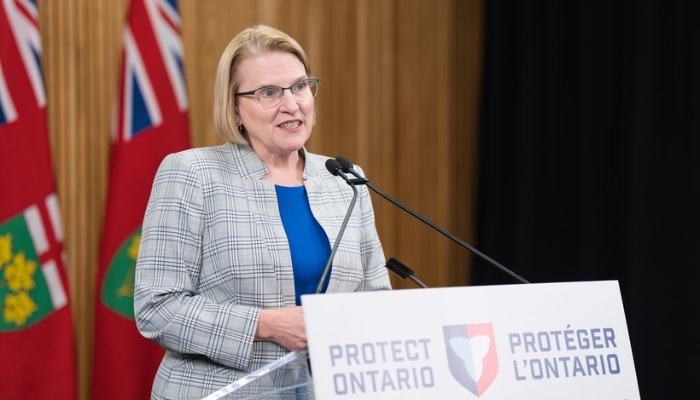
Minister of Health Sylvia Jones announced a new primary care medical record system at Humber River Hospital in North York Thursday morning.
She was joined by Finance Minister Peter Bethlenfalvy, and Labour, Immigration, Training and Skills Development Minister David Piccini.
The proposed Primary Care Medical Record system is designed to provide a secure system accessible from across the province, allowing doctors to have a more complete view of a patient’s health history without having the patient carry physical records with them.
This comes after more than two decades since the eHealth Ontario project scandal, an identical system that an auditor general found was more than $1 billion over-budget, with very little output and a poor governance structure.
The scandal included the resignation of then Liberal Health Minister David Caplan in 2009, and that agency then was eventually consolidated by the province.
Government officials say most primary care providers are already using electronic records, but their systems are isolated.
The Workplace Safety and Insurance Board is partnering with the Ministry of Health on the initiative to support the connecting of convenient primary care for all Ontarians.
In support of the system’s rollout, Ontario will begin an open competitive procurement process to establish a Vendor of Record arrangement and develop electronic medical records — a digital version of a person’s medical chart.
WATCH MORE: Niagara advocates raise concerns as Ontario cuts safe consumption site funding
Family physicians will have the choice to transition to the Primary Care Medical Record system.
As part of the province’s Primary Care Action Plan, Ontario is advancing a new record system to integrate patient records, reduce paperwork for doctors and improve the quality of care received by patients.
Earlier in February, the federal government revived proposed legislation that would allow digital health information to be shared safely across electronic systems through The Connected Care for Canadians Act.
Through the 2026 budget, Ontario will also increase the overall funding for the plan with an additional $325 million to a total of $3.4 billion between 2025 and 2029.
Before the province issues a request for bids, Supply Ontario will conduct a market sounding — a proactive engagement process to discuss upcoming projects — inviting vendors to participate in informal, non-binding discussions.
“Initial interest would suggest that we have a number of organizations and businesses that are very excited to work in this space. But again, I will reinforce that what we are looking for is that piece to make sure that regardless of which system you’re using, it needs to be a medical record that can be shared seamlessly among clinicians and organizations,” said Jones.
Jones wouldn’t give an estimated cost of the electronic transition, but the province adds that they expect the new system to be fully available by 2029.
The Ford government is set to publish its 2026 budget next Thursday.
READ MORE: Ontario asks B.C., Quebec to drop electric vehicle targets