LATEST STORIES:

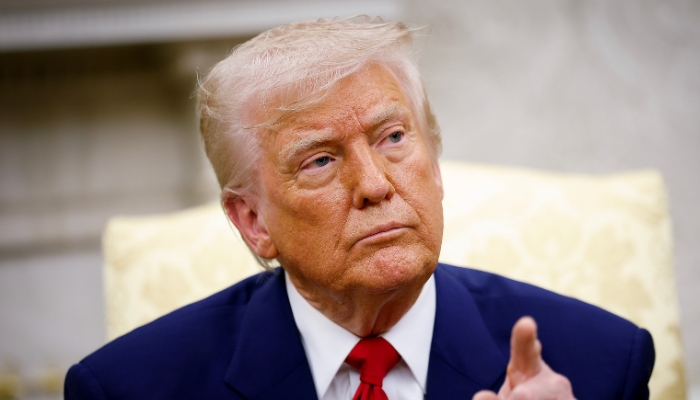
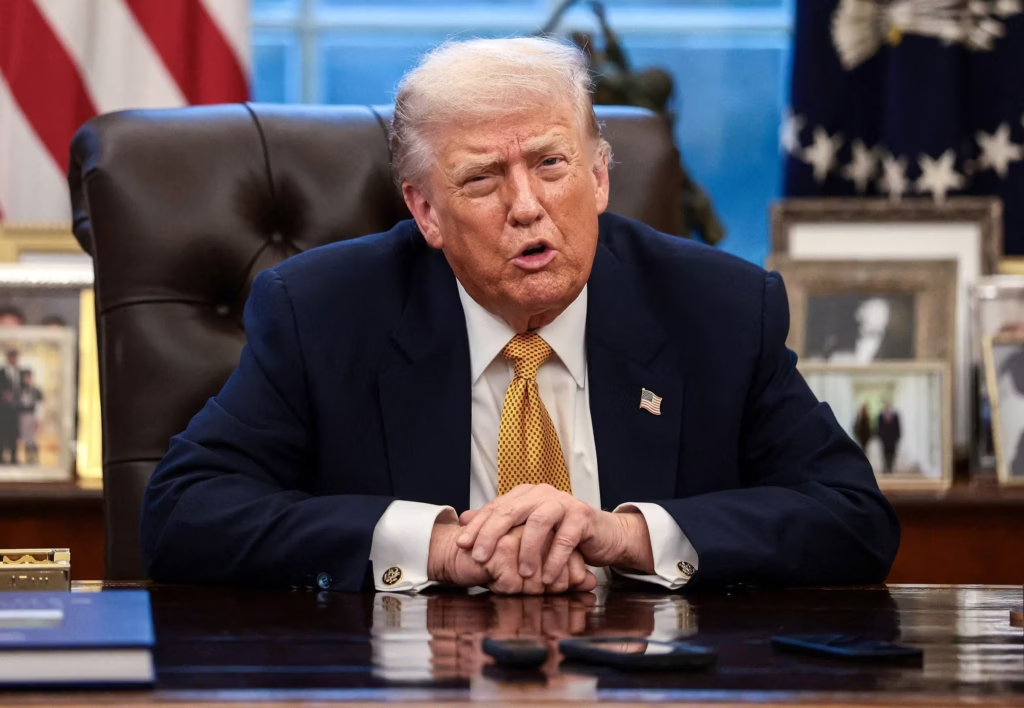
U.S. President Donald Trump has said he will sign an executive order to impose a 10 per cent global tariff after the Supreme Court struck down his use of an emergency legal tool to realign global trade.
Trump says he will use the Section 122 of the 1974 Trade Act to hit the world with the tariffs — but that duty can only stay in place for 150 days, unless Congress votes to extend it.
Friday’s decision centres on tariffs he unilaterally imposed under an emergency powers law, including the sweeping “reciprocal” tariffs levied on nearly every other country.
The Republican president has called the case one of the most important in U.S. history and said a ruling against him would be an economic body blow to the country, but legal opposition crossed the political spectrum, including libertarian and pro-business groups typically aligned with the GOP.
This doesn’t affect his use of other tools to hit Canadian steel, aluminum, autos and more with separate tariffs. Trump says countries like Canada that are hit by his tariffs shouldn’t be celebrating.
“Foreign countries that have been ripping us off for years are ecstatic, so happy, and they’re dancing in the streets, but they won’t be dancing for long that I can assure you,” Trump said earlier Friday.
Trump maintains the ruling actually went in his favour, leaving him with alternatives to re-impose the tariffs that were struck down. He said he is doing that and more.
“Today I will sign an order to impose a 10 per cent global tariff under section 122 over and above our normal tariffs already being charged,” Trump said. “We’re also initiating several sections 301 and other investigations to protect our country from unfair trading practices of other countries and companies.”
Trump, who talks about taking over Canada and taking over Greenland said American law lets him do whatever he wants including destroying foreign countries.
“I am allowed to cut off any and all business with that country,” he said. “In other words, I can destroy the trade, I can destroy the country, I’m even allowed to impose foreign-country-destroying embargo. I can do anything I want.”
Minister of Internal Trade, Dominic Leblanc said there’s critical work ahead to support Canadian business sectors like steel and automotive.
International Trade Minister, Maninder Sidhu said they’ll continue looking to other countries for trade while working with the U.S., adding the tariffs are unjust.
“That position has not changed. We still have the best relationship of any country in the world and we’ll continue to work on that and my job as minister if international trade is to look beyond North America,” Sidhu said.
Ford said Canada needs to keep up the fight against tariffs on auto, steel, aluminum and forestry.
An analyst with the Montreal Economic Institute says the upcoming trade negotiations over the Canada-US-Mexico Agreement are going to be crucial.
“We know in 2026 we’ll have to negotiate and that will be very important to make sure that we have the best deal possible. we know that south of the border might be a bit difficult to negotiate with I cannot stress too much the importance of the CUSMA negotiations in 2026 for Canada,” said Gabriel Giguere, policy analyst with Montreal Economic Institute.
Administration officials have said they expect to keep the tariff framework in place under other authorities.
Trump boosted duties on Canada to 35 per cent last August but those tariffs do not apply to goods compliant under the Canada-U.S.-Mexico Agreement on trade, which is up for review this year.
With files from The Canadian Press
READ MORE: Carney names Janice Charette as Canada’s chief trade negotiator to the U.S.