LATEST STORIES:
First it’s a diagnosis, then it’s the overwhelming feeling of “What do I do next for my child?”
Being on the autism spectrum is a challenge for both parent and child. One organization in Milton is looking to help both.
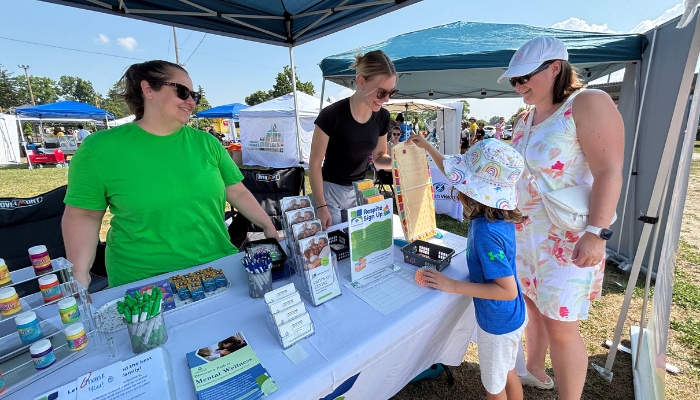
The first neurodiversity fair for this group was at the Milton Fairgrounds Saturday. Thirty-four vendors all in one place looking to help those caring for and those on the autism spectrum.
The group behind the fair today, Milton Autism, wanted to bring all minds together in one place to help parents and kids alike moving through what it means to be neurodivergent.
Mustafa Sajid is the founder and understands, as a parent, what the impact can be.
“A lot of us parents that I know are spending 20, 30, $50,000 a year out of our own pocket,” said Sajid.
In fact, when his seven-year-old son was diagnosed, they had a tough decision to make.
“If we don’t have any funding between three to seven, we are wasting the most important years of their lives. So we had to make that decision to spend all of our life savings,” said Sajid.
Knowing this feeling was most likely felt by other parents, the fair was born. And they received some celebrity support.
“It has given so much to me professionally – and so in a way introducing a few people was the least I could do,” said actor Husein Madhavji.
If you are a fan of the show Saving Hope, you will know Husein Madhavji played a neurodivergent neurosurgeon for five seasons. He said the role changed his perspective.
“There’s a lot of misunderstanding around what it means to be neurodiverse. But when you take on a role, you are forced to find the humanity of that character, of who that person is. And when you do that it unlocks so much,” said Madhavji.
“I’d struggle a lot and I wouldn’t be able to communicate it with those around me,” said neurodiversity advocate Kalea Kirsh.
Kirsh, with partner Celine Wong, created NeuroInclusivity to help others living on the autism spectrum. Through something as simple as buttons and communication cards, Kirsh says it can help those on the spectrum, just like her.
“A lot of autistic people and neurodivergent people have, whether it was intentional or not intentional, have been made to feel like burdens or that their needs are inconvenient. So sometimes it can be a fear-based block that by expressing that I’m struggling or I have needs, that that’s an inconvenience or something people are going to get mad at me for,” said Kirsh.
Kim Vincent, of Ability Hive, agrees the simplest thing can help. One sensory tool on their roster is Chewlery.
“Chewlery is basically for kids who have an oral motor fixation. They want to chew on something, sometimes it’s shirts or other things. And it’s basically a safer way to get that sensory input,” said Vincent.
More information about the Milton Autism Neurodiversity Fair can be found on their website.
READ MORE: Blind golfers tee off in Simcoe for eight-day international tournament