LATEST STORIES:

TORONTO — Several environmental groups have launched a constitutional challenge seeking to kill an Ontario law that allows cabinet to suspend other laws, arguing the Doug Ford government has abdicated the role of the legislature.
Wildlands League, Environmental Defence Canada, Friends of the Earth Canada and Democracy Watch allege Ontario’s special economic zone law delegates powers reserved for the legislature and wrongly puts them in the hands of the cabinet.
Ford’s Progressive Conservative government passed Bill 5, which included the special economic zone provision, last year. That provision allows cabinet and the environment minister to suspend any and all provincial and municipal laws within such zones as they see fit.
“We say that this delegation that the Special Economic Zones Act allows for goes too far, that it’s not simply the legislature delegating to the executive branch,” Lindsay Beck, a lawyer with Ecojustice who is representing the organizations, said Wednesday.
“What it amounts to is an abdication of the legislative role and when you get to that point of abdication, that’s unconstitutional.”
Beck pointed to Section 92 of the Constitution that allows for the legislature to make laws.
“What this law is doing is in effect allowing the executive branch to make laws,” Beck said.
The groups filed the lawsuit on Tuesday.
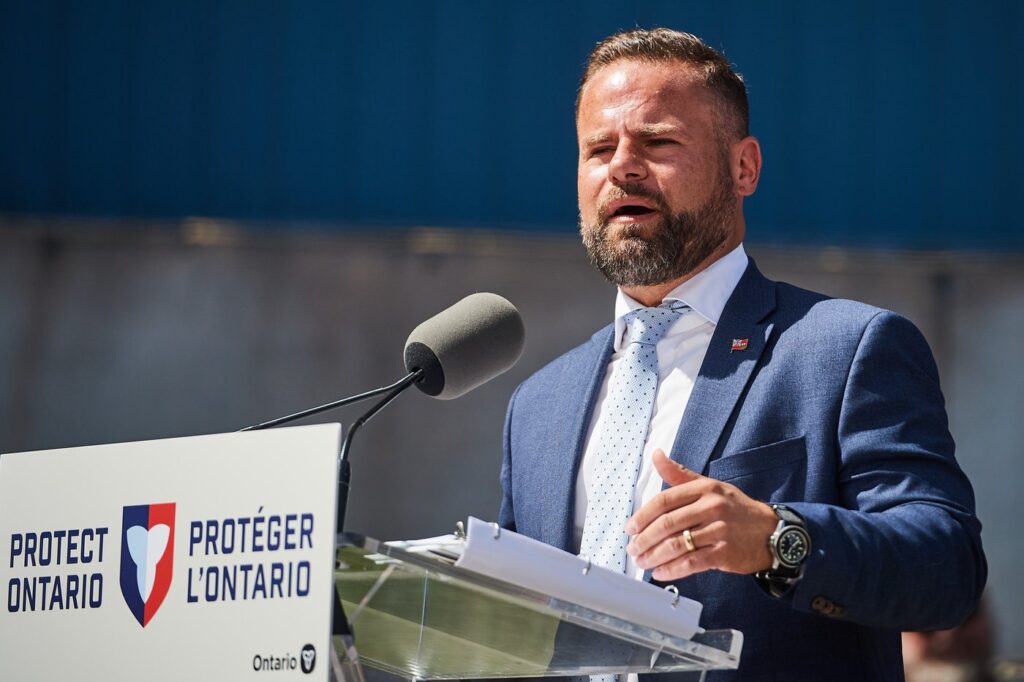
Ford and his cabinet ministers have framed the legislation as crucial in the province’s fight against U.S. President Donald Trump’s trade war with Canada.
The province has said the aim of the legislation is to speed up the approval and construction of large projects, including mines. But the special economic zone provision sparked a firestorm of anger at Queen’s Park last year.
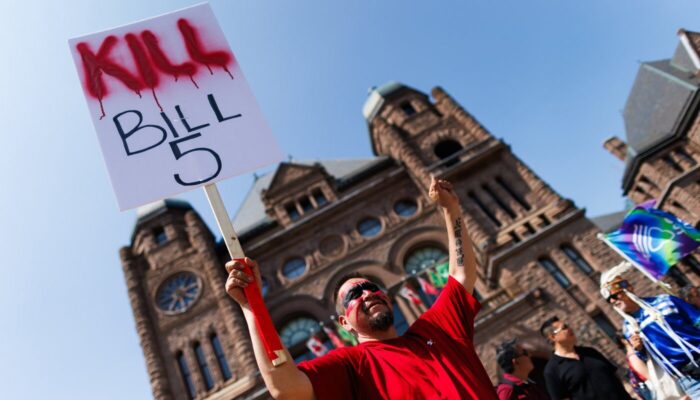
First Nations showed up en masse to protest the bill, saying the new law ignored their concerns and trampled their rights.
The province initially sought to declare northern Ontario’s Ring of Fire region, said to be replete with critical minerals, as its first special economic zone. But the blowback caused the government to change course.
Ford now says he doesn’t need that designation to accomplish his goal of building a road to the Ring of Fire to kick-start mining in the region.
Several remote First Nations are on board with that plan as a way to lift themselves out of poverty, while other nearby First Nations are against the development that they believe will change their way of life.
Ford recently said he will designate Billy Bishop Toronto City Airport as a special economic zone as he plans to expand it to allow jets to operate there. He has not said which laws would be suspended and the province has yet to make any corresponding regulatory changes for the airport.
A spokesperson for Economic Development Minister Vic Fedeli said the criteria for special economic zones were “shaped by rigorous consultations with Indigenous communities and stakeholders” across the province.
“There will always be people who want to maintain the status quo and hold Ontario back, but with our economy under direct attack, we need to change how we do things,” Jennifer Cunliffe wrote in a statement.
Cunliffe said the province is “taking bold and creative action to cut red tape, speed up duplicative approvals, and move projects of strategic importance forward faster,” while maintaining environmental safeguards.
Anna Baggio, conservation director with Wildlands League, said the province “is effectively hanging a sword of Damocles over all of our heads.”
The law is not “in any way connected to hardening Ontario against U.S. economic force,” said Phil Pothen, a lawyer with Environmental Defence.
The law leaves too much up to the discretion of Ford and his cabinet, he said.
“Everything from speed limits to employment rights and workplace safety protections, all of those things, as they apply to you specifically or your workplace specifically, or your home specifically, are entirely within the whim of cabinet now,” Pothen said.
Last year, nine First Nations launched a Charter challenge against Ontario’s Bill 5 and a similar federal bill, known as Bill C-5, both of which are designed to speed up large infrastructure projects.
The First Nations have asked the Ontario Superior Court of Justice for an injunction against the laws that they say are a “clear and present danger” to their self-determination rights to ways of life on their territories.
The bills sparked protests on Parliament Hill and a slow-rolling highway blockade.
They also inspired Neskantaga First Nation and Attawapiskat First Nation to build an encampment along the Attawapiskat River where community members plan to eventually block the road to the Ring of Fire, parts of which are scheduled to begin construction this year.
This report by The Canadian Press was first published April 8, 2026.
Liam Casey, The Canadian Press