LATEST STORIES:

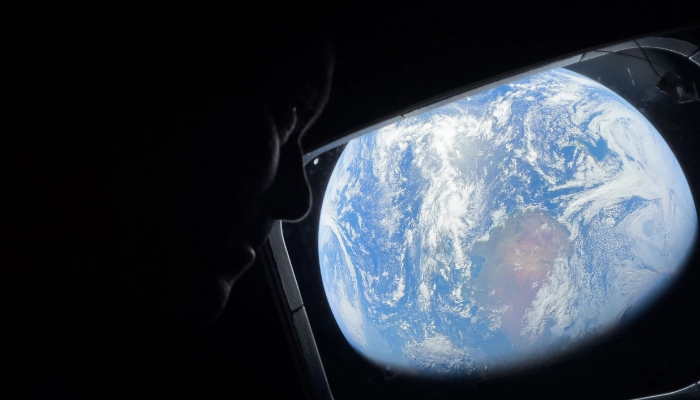
The crew aboard Artemis II is just one day away from splashing down in the Pacific Ocean after going where no man has gone before.
The successful mission, which has been watched by more than 16 million people, is just the start for NASA as it hopes to make trips to the moon an annual event.
“I think this mission is the beginning of a new chapter. It’s been incredibly exciting to see,” said Ivan Semeniuk, science journalist at The Globe and Mail.
The crew onboard Artemis II — including Canadian astronaut Jeremy Hansen — are on their way back to Earth after completing a six-hour lunar flyby Monday. The mission saw the crew travel farther into space than any humans before, breaking the distance record set by Apollo 13 in 1970.
While the moon landing in 1969 was watched by an estimated 650 million people worldwide, this voyage gave more than 16 million people a live look at the moon never seen before.
“The Apollo astronauts in the past long ago, some of us who were just little kids when that was going on, we remember the dialogue between the Apollo astronauts and mission control. But it’s nothing like what we saw this week where you had the astronauts and scientists in deep conversation about details of different targets, we could see the images, we could literally listen in on those conversations minute by minute. It was such a vivid experience. It really felt like you were there. I think that’s going to be kind of transformative for this program,” said Semeniuk.
WATCH MORE: Artemis II breaks record set by Apollo 13 during flyby around moon
While in space, Hansen and the team took questions from students in pre-recorded messages and spoke with Prime Minister Mark Carney in one of three space-to-Earth connections organized by the Canadian Space Agency.
The astronauts are scheduled to splash down tomorrow off the coast of San Diego. While they will only have been in space for 10 days, they will still require time to re-adjust to Earth.
“Astronauts will be coming back to Earth after nearly 10-days in space in a in micro-gravity environment. They’ve also been in a fairly high-radiation environment relative to what we experience on Earth or even in low-Earth orbit where the space station is still inside the protection of Earth’s magnetic field. So it will take them some time to recover,” said Semeniuk.
For NASA, the success of this mission is just the start. The agency hopes to make lunar trips an annual event and aims to land on the moon again in just a couple of years.
“The next thing that we’re meant to see after this is Artemis III, which is a mission in Earth orbit — but a mission that would test the capsule’s ability to dock with lunar landers in advance of a lunar landing. And currently the schedule calls for a lunar landing as early as 2028,” said Semeniuk.
READ MORE: NASA’s Artemis II mission reaches historic depths in space